Excerpts from ‘A Brief History of Ore Village’ – a talk given on 17th July 2024 by Karen Draper and Debbie Jones of Fairlight History Group.
There is no evidence of a village of Ore before the Norman Conquest, though the name is an Anglo-Saxon word Ora, describing the landscape. There are many other places in England with names derived from the same word, mostly small, and in common they have hills of a particular shape – long with a flat top ending in a shoulder at the end, this exactly fits “The Ridge” locally.
The place is not mentioned in the Domesday Book so it was either undeveloped or included in another estate. It is recorded first soon after 1100 in a person’s name: Ailric de Ore who paid part of his tithes to Battle Abbey and was no doubt Lord of the Manor of Ore – later known as Ore Place. His overlord was the Earl of Hereford, Humphrey de Bohun, son-in-law of King Edward 1.
St. Helen’s Church was built close to the manor house for the convenience of the Lord who both appointed the priest and paid him. The church would be attended by his family, his labourers and tenant farmers, but it would not have been the centre of a large settlement. Like other parishes in the area, Ore always consisted of scattered farms and tenements.
Fairlight Down was not in the early days part of Ore parish, but common land of the people of both Ore and Fairlight – another Anglo-Saxon descriptive name, which originally was Fearnlegh, the bracken clearing.
The original location of Ore, shown on early maps, was a mile away from the present village, around the old parish church of St. Helen’s. By contrast, maps from the last century show Ore marked close to the present Christ Church, Ore. The old church was very popular with visitors from Hastings in the first half of the 19th Century when the evangelical preacher, Rev. Doctor Fearon was Rector there. 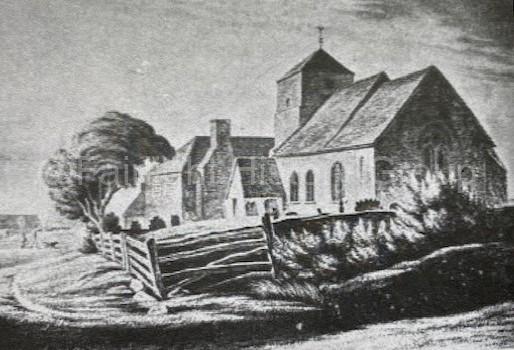
It was usually approached by way of Ore Lane (now Elphinstone Road) and the large house called Oakdene (no 109) was the old Rectory.
Bullock in his history of the old church quotes from a booked called “The Land We Live In” by Charles Knight (1847)
“Among the short walks inland from Hastings, none is pleasanter than that to the pretty village of Ore. Your way to it lies along shady green lanes, and the church tower rises as a landmark before you for nearly the whole distance.
The village itself consists of merely a few humble cottages and a farmhouse or two, but they have a rustic picturesqueness about them that is very pleasing’ and with the church, form a good object to ramble after. The old church stands of an eminence by a broad, breezy common, and from both churchyard and common, there is a wide and excellent prospect”.
The old church fell into ruins after its replacement – the present St. Helen’s was built in 1870, but in 1902 and at least once a year for many years afterwards, an open-air service was held there.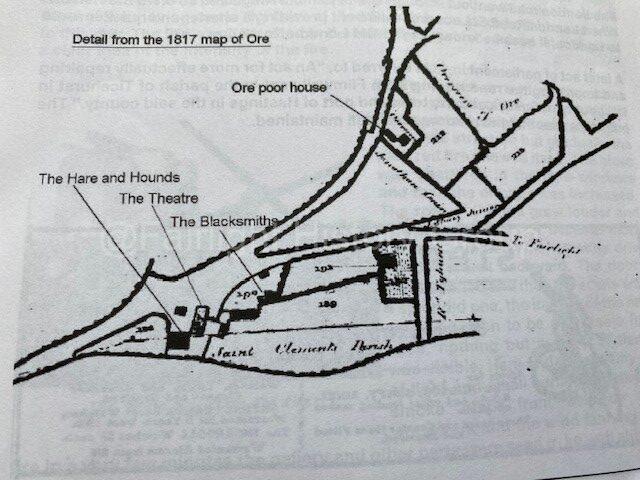
A survey and valuation of the tithes belonging to the Rectory was prepared in 1817 containing maps and descriptions of land, property and occupiers in Ore. A few buildings were marked along the turnpike road including the original Hare and Hounds public house, and the Play House both owned by Thomas Button. Close to them stood the Smithy’s shop owned by John Stacey. Following the main road round the next major building was the White Mill, standing just past the junction with Winchelsea Road. Apart from a few small cottages in Middle Road and Fairlight Road, the rest of the village was fields.
The modern-day location of Ore Village has only been the nucleus of the settlement for the last 200 years. Prior to this, the settlement was extremely rural and sparsely populated. It was heavily wooded (Coghurst Wood being a remnant of this) and mostly farmland. Where present-day Ore Village is located was originally known as Fairlight Down, an open area of scrubland surmounted by a windmill and crisscrossed by tracks. By the 1700s buildings started appearing in present-day Winchelsea Road, Middle Road and Fairlight Road. There were several windmills in the vicinity including Fairlight Mill built in the 1700s, rebuilt in 1819 and burned down in 1869 (it stood where present-day North’s Seat is); White Mill (also known as Cheale’s Mill) built in 1813 and burned down in 1900; and Black Mill (Down Mill) built in 1855 and demolished in 1918. Until 1859 the only place of worship in the district was the 12th century St Helens Church (decommissioned and rebuilt nearby in 1869) one mile away along the Old London Road – now called The Ridge – but in 1859 Christchurch Ore was built. 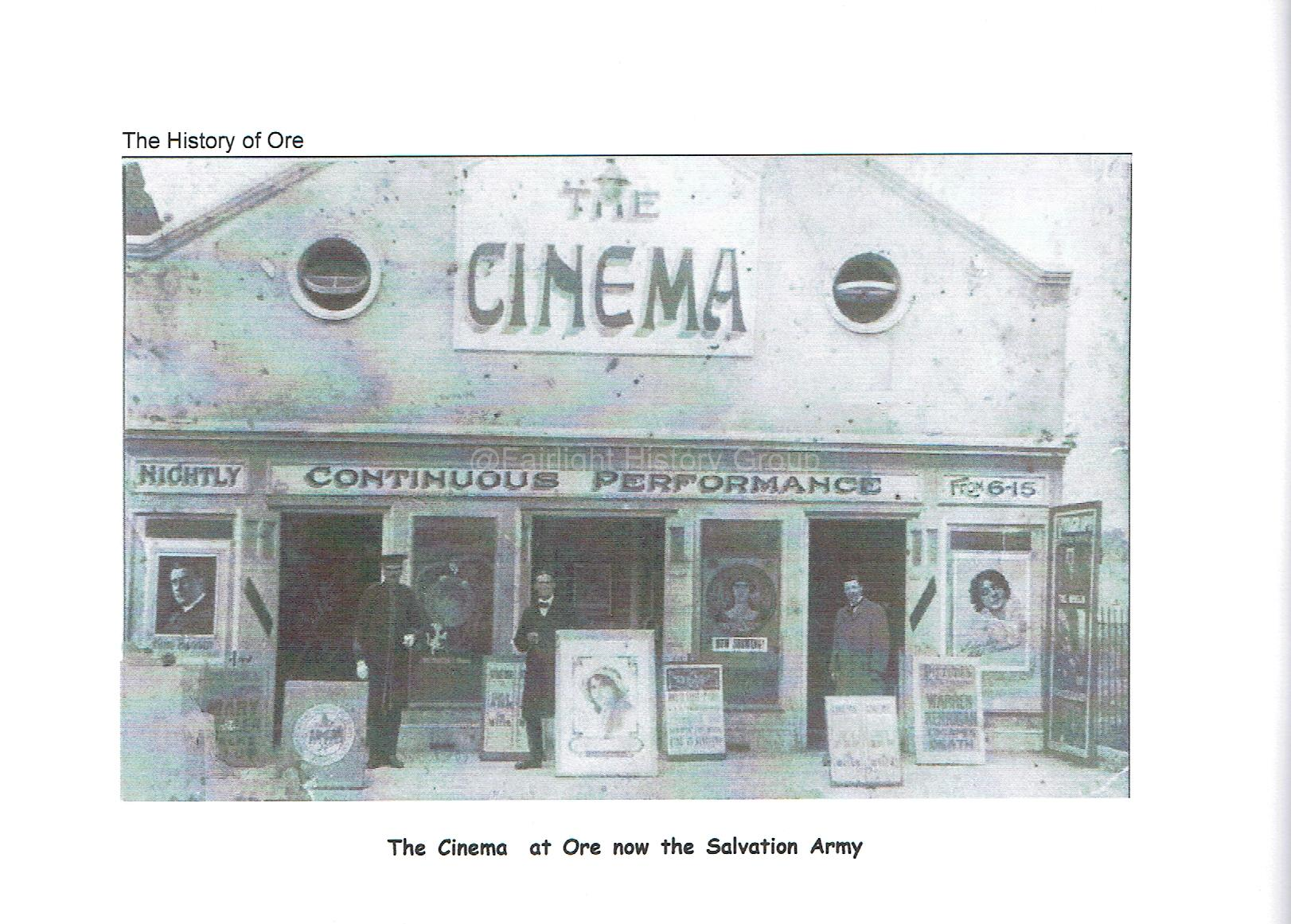 For a brief time in the early 20th century Ore Village even had its own Cinema – originally called The Princess then became The Cynthia – which was later closed, the site being bought by the Salvation Army.
Ore Village School was constructed circa 1851 as a mixed national school. From 1867, street directories list both a national and Infants school in Ore. The Ore School Board formed in 1878 to govern the running of the school, holding monthly meetings. In 1883 a meeting of the school board heard that further accommodation was required, possibly leading to the rebuild in 1886 when separate boys’ and girls’ infant’s departments were created. At that time, the board of the school consisted of the following persons; The Rev. D. A. Doudney, Jun., president, Messrs. G. A. Thorpe, Spalding, Gibson, Beck (Clerk), and Gilbert (School Attendance Officer). In 1888, there was a proposal adopted by the board that a new school on the Sandown site for accommodating children of the parish between the ages of 8 and 13, census records showing that there were some 348 children in the catchment area that were not receiving any schooling at that time. 
In 1897 the Hastings United District School Board took over the running of the school and by 1899 it had accommodation for 250 boys, 170 girls and 200 infants, with the school situated in Old London Road. Following the 1902 Education Act, during 1903, it came under the control of the Education Committee of the Borough of Hastings. The boys’ section of the school was closed in December 1925. The girls’ section subsequently became a Senior Girls’ School, then a Secondary Modern School and finally a Community Centre.
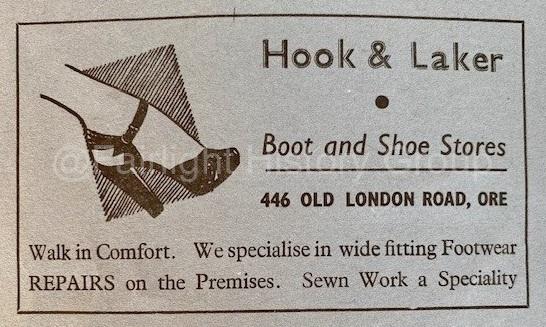
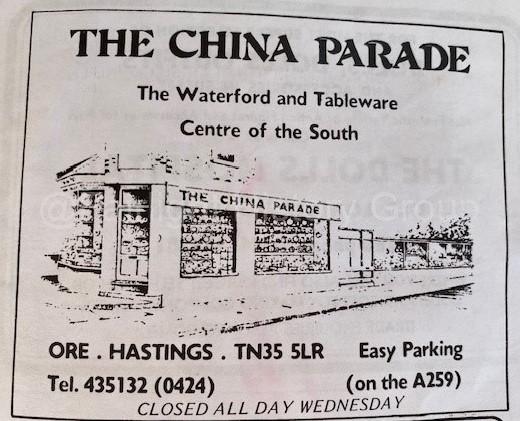
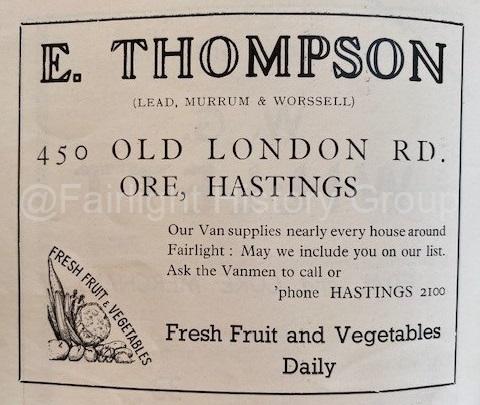
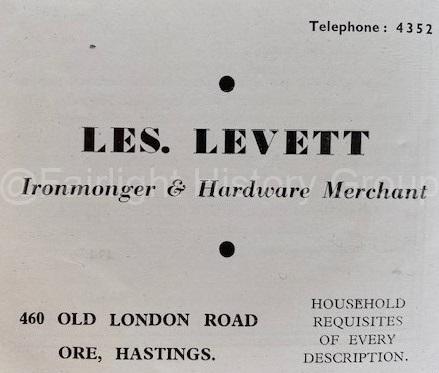
Adverts found in old copies of the Fairlight Church News