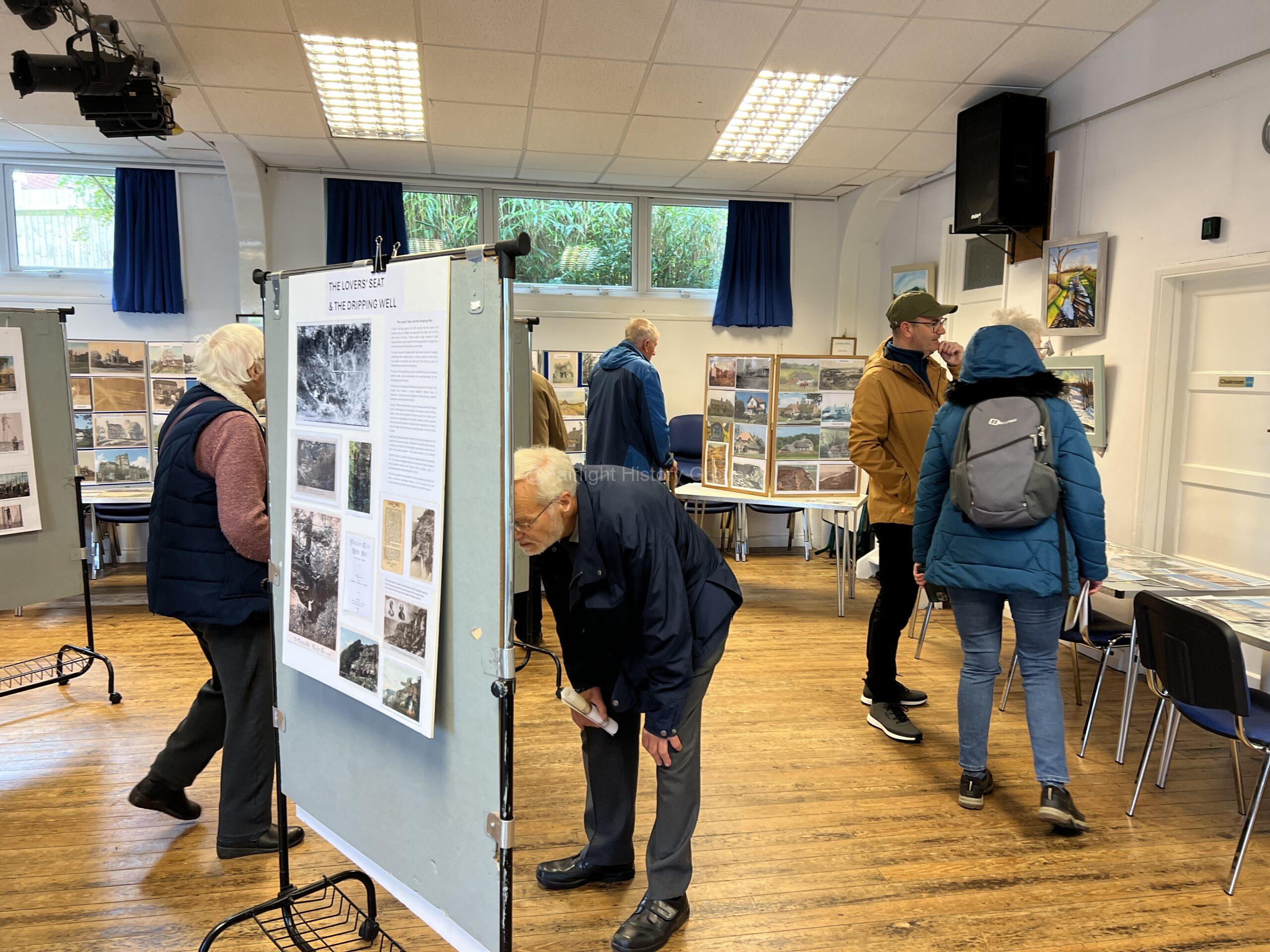
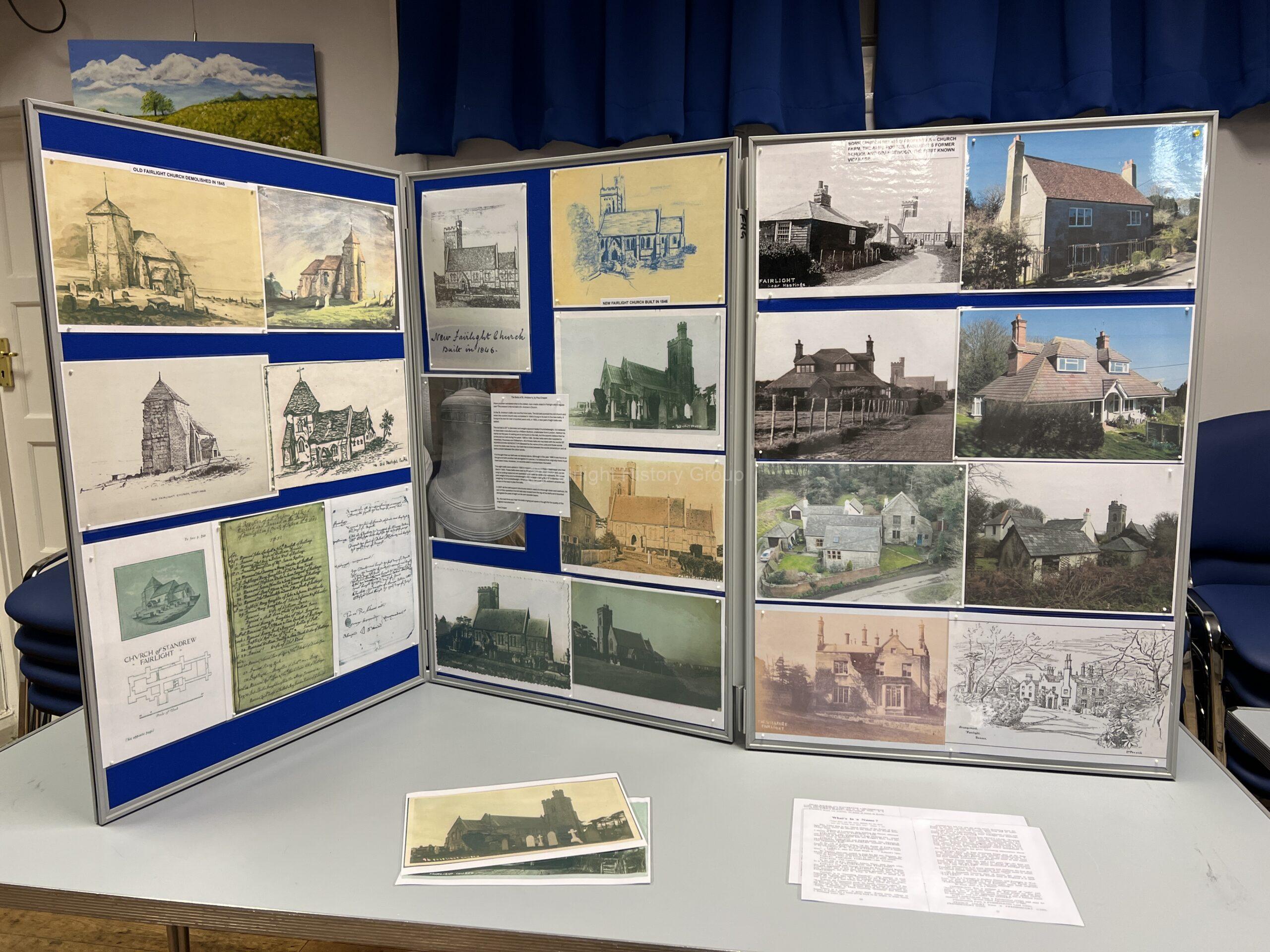
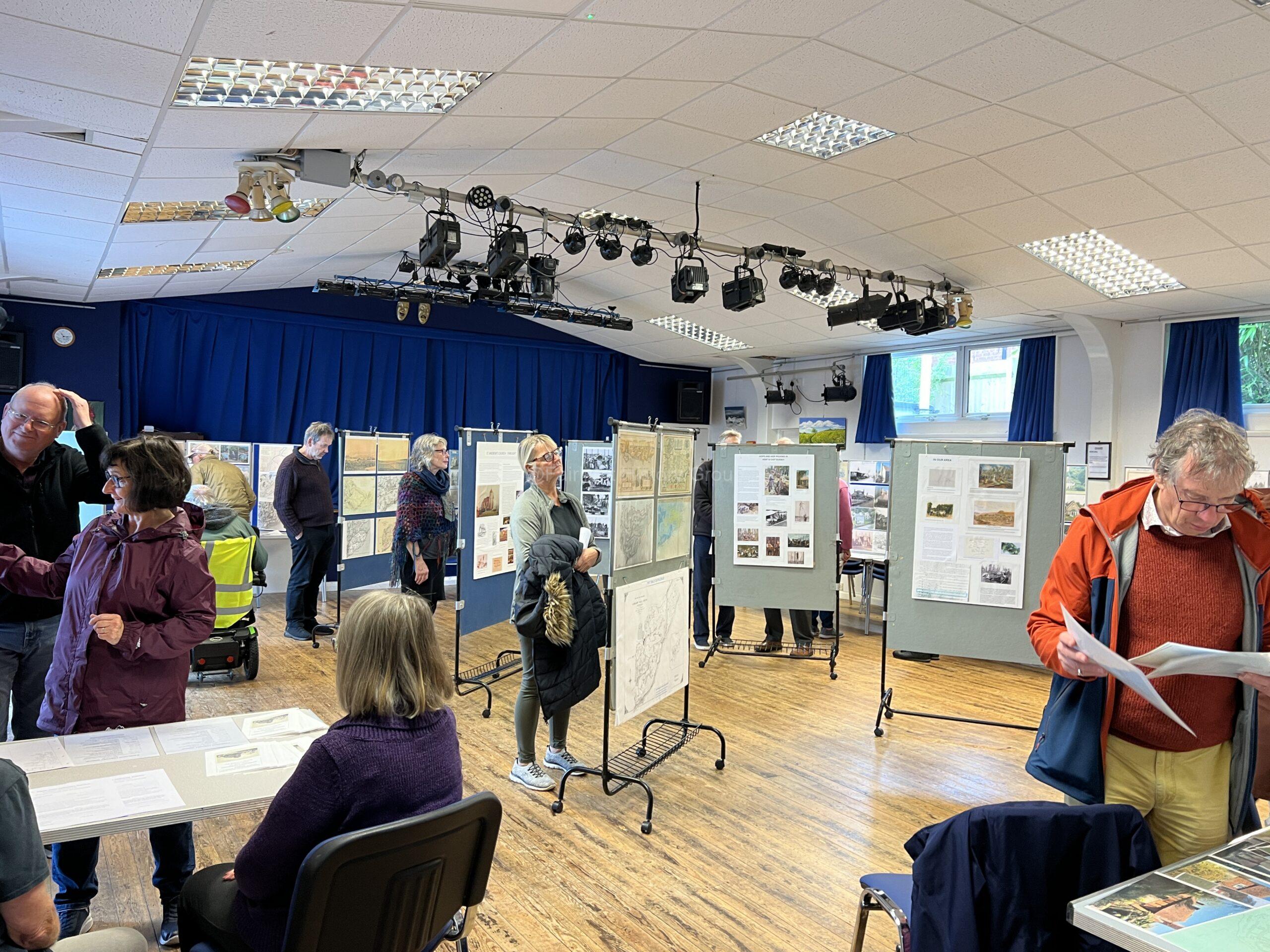
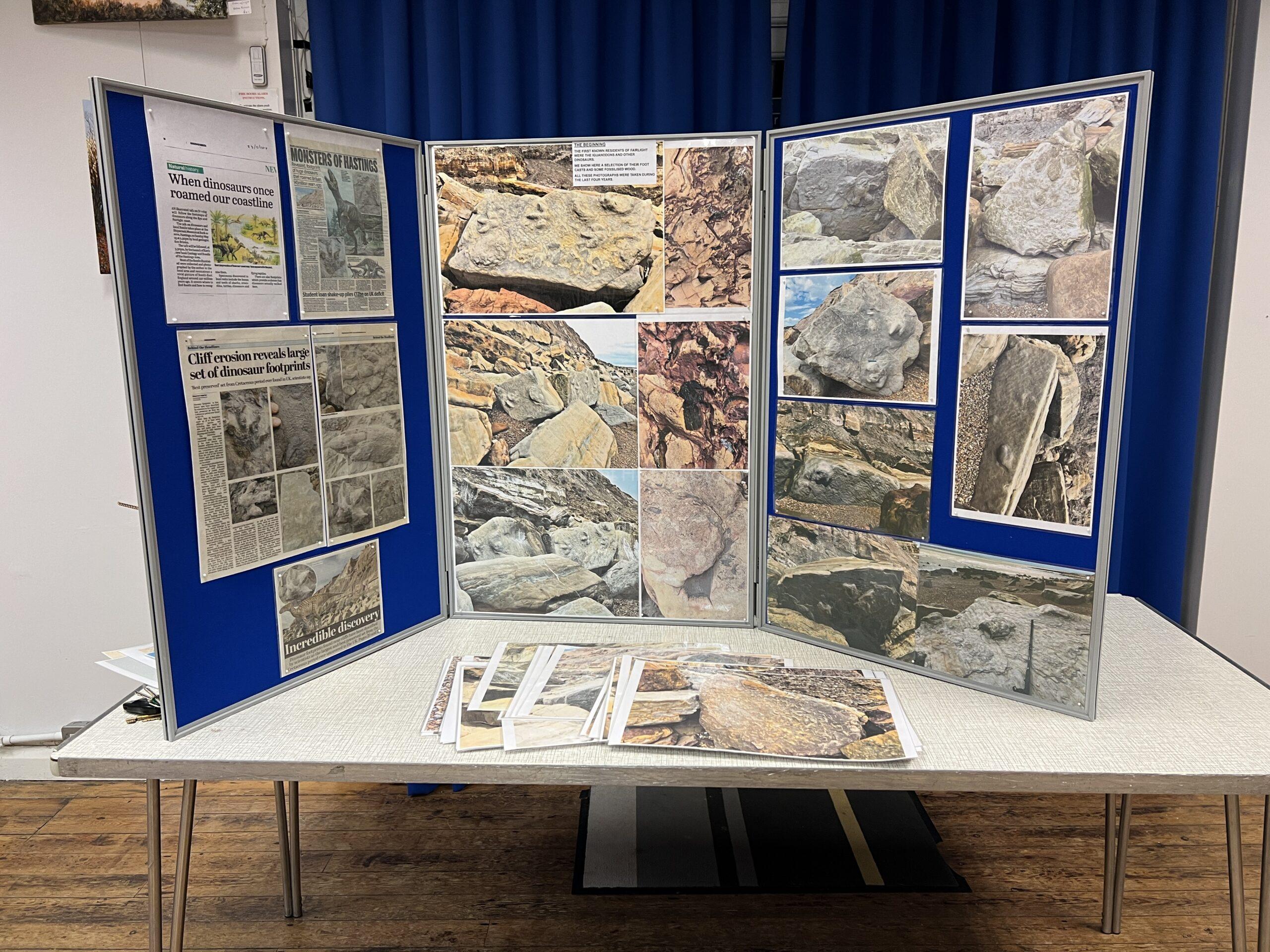
Author Archives: Karen

Memories of June Carter interviewed in 2021 as part of our oral history project

Name : June Margaret Carter

Maiden name: Luck Baker

DOB 19.05.31

Where were you born: It was called Tin Town as the houses were made of Tin (Broomgrove, Hastings).

Where have you lived:  I lived at Broomgrove until I was 5, then moved to Ore – I was at Ore until I married at 22.  I’ve been living in Guestling since 1953 – 60 odd years.  

Work:  Dewhurst’s the Butchers as Cashier/bookkeeper. They had 9 shops in Hastings in those days – they traded under several different names: British and Argentine Company, Eastman’s, Kingston’s and Dewhurst’s. I worked for them for 8 years after I left school at 14.  I stayed with same firm – working at different shops as a relief.  I was at Bohemia Road shop for six months’ training.  He was a strict Manager, but he taught me well.  Then I went to Kingston’s in London Road, then I went to an Eastbourne shop. After I worked on the land I went to the Beefeater for a job for a change!  In Wartime 1945 I worked from 8.30 am to 6.00 pm, but sometimes we were still there at 11.00 at night doing orders.  No overtime in those days and you didn’t question it – just kept going! 

Coronation Memories (George V1): The Mayor was Councillor Blackman (who owned a coal company), he was a bit of a philanthropist.  All schools had a Christmas tree and every child had a present courtesy of him.  At the Coronation, children were all given a silver bracelet with little coloured stones in the shape of a crown and it is still as it was then – not tarnished (not actual silver). This was a gift from him.  We were also given a propelling pencil with a little glass window on the side of it and when you shook it a little gold coach appeared.  I gave it to my granddaughter.  On viewing the Coronation – I was only 6 at the time.  No TV then, so unless you had a TV or you knew someone with a TV you wouldn’t have seen it!!  

Memories of Winter of 1947 and 1963.  !947 – birds froze to the lines overhead.  No ‘buses running – so I walked from Ore to Bohemia Road – I was doing my training then.  I managed to get there at exactly 8.30 down Mount Pleasant and up through the Park. Very pretty – but awful to see birds dead.  My youngest boy was 3 years old in 1963 and we had winter from the end of Nov. to March – an Arctic Winter.  No central heating – everyone crowded around one fireplace.  We had to breathe on window to see out.  When I got married I put the cot by the chimney breast.  One fireplace in the whole house.  Babies wrapped up and we were too.   

Memories about the storms we have experienced 1987.  I worked on the land – packing apples – there was an almighty crash – a high building. One of the apple bins had been picked up and had come down through the roof.  This was at the bottom of White Hart so the hill saved it from the wind.  

Memories of 2nd World War. I was not evacuated. I didn’t go to school for 18 months – roamed in Pett and Fairlight.  I got to know Fairlight very well.  Went to Fairlight cove down the steps – lots of barbed wire on the beach at that time.  The school children, when it all opened up after the War, were sent (not asked – just told!) to all the fields towards Fairlight Church where we had to go gleaning which meant picking up all the seeds from the threshers.  We had little nimble fingers which were just right for gleaning! We had to collect sheeps’ wool on hedgerows and would tease and spin it – then used beetroot skins and carrot peelings to dye the wool – wash it into skeins to make sure lanolin had come out.  This was all part of school training.  Ore Village school was a house attached to the school – we would go there and be taught how to clean lampshades and dusting on tops of doors!  Also how to clean the grate, bathrooms and bedrooms and the kitchen. 3 girls a week would cook dinner for the teachers and you would go to the shops to buy provisions to do so – what you would need.  We also went to Mount Pleasant laundry to learn how to wash and boil clothes, starch clothes, pillowcases everything was starched! This was all part of our education. I learnt to cook meat puddings and pies, stews – wholesome food.  After I got married I was glad I had the training.  Even now I observe the rules the teacher told me.  Scripture was taught – Headmistress explained in everyday language.  Maths, History, Geography, PE, games, Art, Music. Greek Mythology and Shakespeare -all the Classics were taught.  Glad I was taught these things – this was all in Senior education.  My sister in law was a sports’ fanatic.  We went to the Pilot Field every year – all schools competed there – long jump, high jump, relay and hurdles.  I won the long jump and was 3rd in the 50 yards.  Football was played there as well.  Money was tight and I couldn’t stay on for further education.  I earned a pound a week out of which I gave mum 10 shillings.  Mum didn’t buy our clothes when we started work.  We managed our own money and didn’t expect a lot.  Potato and hop picking was done for extra money.  

There were not many houses in Fairlight in those days.  All gorse and grass. The Lover’s Seat has disappeared and the land is different now.   


Memories of Alison Pont interviewed in 2021 as part of our oral history project

Interviewee: Alison Renee Pont                                        DOB: 2.10.1933

Maiden Name: Moore                                                         Place of birth: Eastbourne, East Sussex

Family moved to Hastings before Alison was 5. Lived in Parker Road.

Went to Mount Pleasant School, then Hollington Juniors and Tower Road Senior School.

Camped in Ecclesbourne Glen around 1935.

During a slump in work in Hastings, the family moved to Ashford, Kent.

During the war, she was evacuated to Eastbourne to stay with her Grandma but went back to Hastings when Grandma died of leukaemia.

Watched all the V2 rockets and doodlebugs going over. Had an Anderson shelter in the garden at her Grandma’s but had a Morrison shelter at her home in Hastings.

Her dad was a carpenter and had a DIY wood shop in Ore. The first houses that were built in Fairlight Cove didn’t have cupboards so Alison’s dad came down and advised on what wood to use etc.

He was a founder of Fairlight Bowls Club although he still lived in Hastings. Alison and her mother used to help raise funds for the Bowls Club by helping at Jumble sales in the Village Hall.

Alison left school at 14 and became a hairdresser in Hastings. She did three years training and then two fully qualified. She then started working from home and did that for 40 years.

In 1954 Alison married Robert Edgar Pont. He was from Hastings and they met over a love of sport. He was a keen footballer.

They had Wendy in 1955 and her brother four years later. Alison had bad arthritis in her hips so decided not to have any more children. However when she went to work in a Children’s home, she met and fostered two girls (sisters??) who became and still are part of their family. The girls’ grandmother asked Alison and her husband not to let them call them Mum and Dad but instead Auntie and Uncle as that means more. They carried this on all their lives but now it tends to be Nanny! One of the girls has seven children! Lots of grandchildren and great grandchildren. 

In 2005 Robert died and Wendy asked Alison to move in with her family in Fairlight but Alison wanted to give it five years to see how she managed. She was already a member of Fairlight Floral Club.

In 2010 Alison moved in with Wendy. Ken, Wendy’s husband, was born in Scotland but grew up in Fairlight. His family house was called Sealands.

Memories of Dave Watson interviewed in 2023 as part of our oral history project

Dave and Sally came to Fairlight  44 years ago.  When they first came here they had a shared telephone line and it was very good serve as the telephone exchange was sited at the end of Waites Lane!  


He remembers lying in bed one night in the early days and their house shook!! This was when a massive cliff fall took most of Sea Road!! – and there was talk of maybe having to build a road from Briar Close across the field to Pett Level Road!  


Storms:  Dave remembers the storm of 1987.  He slept through the night, but the next day no-one was getting out of Fairlight Cove.  Maid-stone lost half its roof, but Dave’s only lost two tiles!  He was involved with the clearance work – chain-saw work.  He also remembered three/four separate occasions when Fairlight was cut off due to snowfall.  He remembers going out with snow chains and getting as far as the Church at top of Battery Hill and being met with a wall of snow!  


Dave worked as a lift engineer and in the winter of 1963 as it was so cold in lift shafts – working with metal and draughty areas, he used to go to public baths where he and his workmates would have an actual bath with Radox ( not many people had bathrooms at home in those days). But he said there didn’t seem too much of a problem getting around as the councils kept road clear in those days much more than today!  


Scotty who was the man who attempted the first sea defence at Fairlight used scaffolding poles plunged into the beach onto which he piled rubber car tyres, but after the first big storm hit them – the tyres disappeared!!  He also bought a barge which he sailed from Pett Level on which was a welder; he also drive an old bulldozer from Pett Level to Cliff End, put the bulldozer on the barge and floated it along to Fairlight.  After another big storm the barge sank!!  The bulldozer is still there in the undergrowth!    He also built a scaffold frame and pushed it over the top around the Rockmead Road area so that this could be worked from, but it bent in half!!!  Fred Cook raised the first amount of money for the Berms.  

 Mr. Colin Gotts was born in Primrose Hill and he told Dave there used to be a tea place for walkers up at John’s Seat.

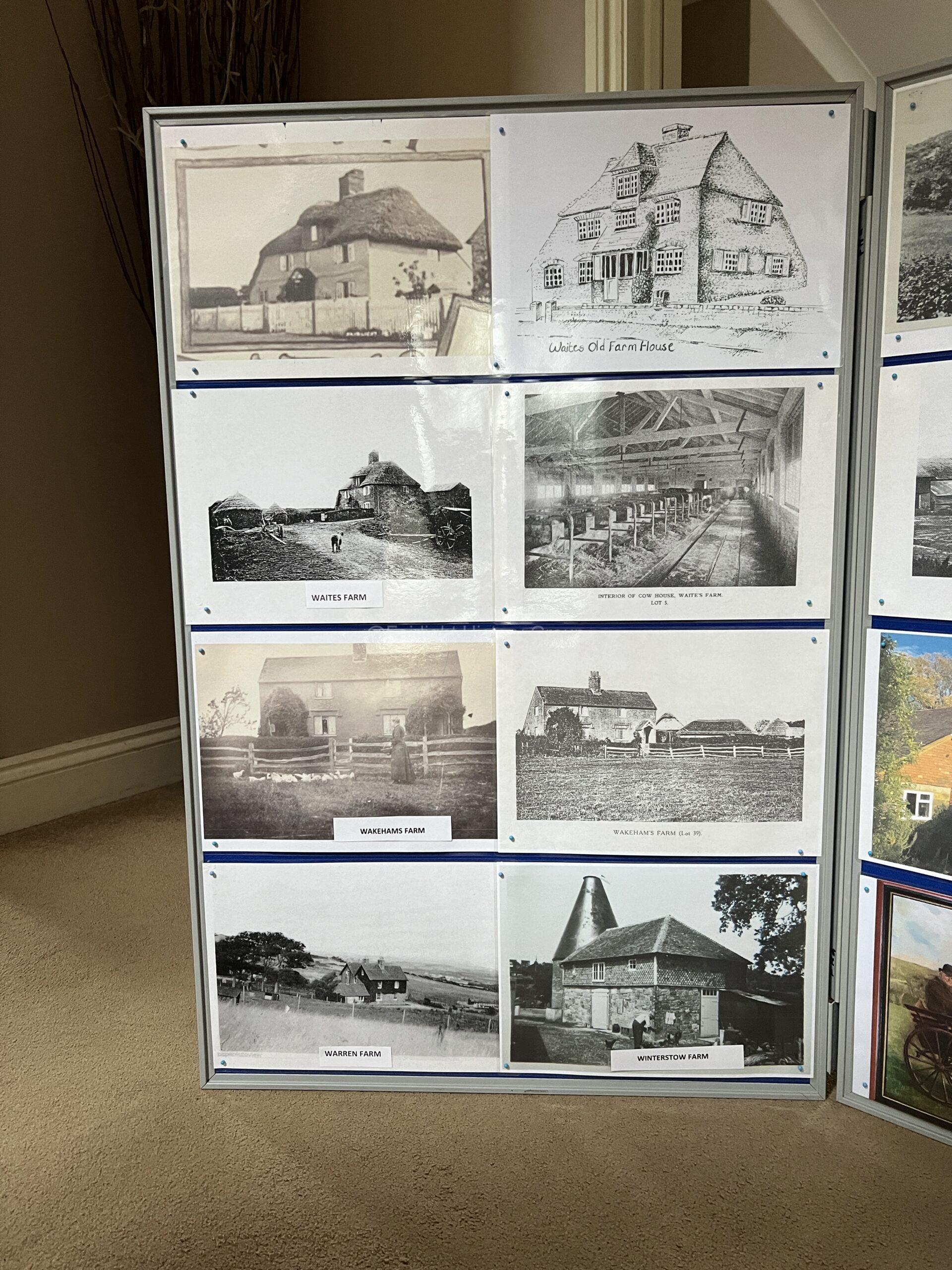
People in Lower Waites Lane area would regularly walk over to Griffins Farm shop down across a bridge over the stream and up field towards Wakehams Farm. In the early days there were no trees around the area and the Egg Man and Colin Gotta would walk to school and walk up the LWL stream.  There were potatoes growing in the fields near John’s Seat in those days and the Mermaid Inn at Rye used to grow veg in Jenny Annetts field when Dave and Sally first came to Fairlight.

 In Clinton Way there was a long wooden house split in half that used to accommodate Canadian soldiers in the War-time.


5th ANNUAL GENERAL MEETING 2024

Fairlight History Group

5th Annual General Meeting held, Wednesday 21st February 2024 at 2.30pm at Fairlight Village Hall

Present:           The retiring committee:

Haydon Luke – Chairman,

Paul Draper – Secretary,

Pauline Collins – Treasurer,

Julie Marshall – Membership Secretary,

Karen Draper, Liz Green and Debbie Jones.

(Liz and Debbie were unable to be present)

Plus 32 other members.

Welcome:- Haydon acted as Chairman and welcomed all to the meeting.

Apologies for absence:- Paul announced apologies for absence on behalf of Liz Green, Debbie Jones, Mick Jones, Peter Firmin, Anne Scott, Pam Chisnell, Carol Ardley, Helen Smith and Annette Humphries, etc

Approval of Minutes of 4th AGM. Draft Minutes were available for inspection at the meeting. Haydon asked if the meeting approved the Minutes. The Minutes were approved.

Chairman’s report:- Haydon presented the Chairman’s report:

Welcome to the 5th FHG AGM. I am delighted that the 2023 year for our group, unlike some previous years, was a ‘normal’ year with no national pandemic to navigate.

I want to begin my review of our 2023 activities with two heartfelt sets of thanks:

First to the committee: Paul, Karen, Pauline, Julie, Liz and Debbie who have worked so hard throughout the year not only in committee meetings but constantly in the background doing lots of mundane but important jobs ensuring that our meetings and events ran smoothly. Formally, the committee met monthly to manage the year and prepare for the future.

Secondly, thanks to you, the members, who have continued to attend meetings, support our activities and share your interest in and enthusiasm for, all aspects of local history. The FHG is only as strong as you enable us to be. 

The new year’s programme is now out and we hope we have devised a programme of talks and events for the year which you will find interesting, rewarding and satisfying. The list has been circulated to you all and is on the website.  We are always open to suggestions for future talks, visits or activities. If there is something you’d be keen for us to see, do or have a talk on, please tell us what you would like.

Concerning our website, particular thanks are due to Karen and to Bill O’Reilly for overseeing this first-class resource. The number of hits it receives is steadily increasing and we continue to respond to all queries received via the website. Remember the address – https://www.fairlighthistory.co.uk/ . We want to keep adding to it with more pictures, stories, reminiscences etc. If you have any contributions you would like to put on the site, please contact Karen.

Additionally, Paul and I continue to research all aspects of Fairlight with new material emerging all the time. And of course, we are very willing to offer help and guidance to any other members who would like to undertake local research.

Looking back at 2023 I hope you will agree that we had an interesting and varied programme which included a mixture of talks by our own members and by visiting speakers in addition to special events like the visit to the Winchelsea Methodist Chapel. We also mounted an extensive August exhibition celebrating 100 years of Fairlight Cove in a joint venture with the FRA. We all felt the exhibition was a great success and will be staging another one in October, again jointly with the FRA. Sadly, the planned visit to the Dymchurch Martello Tower had to be cancelled at a late stage owing to the death of the chief organiser for the Friends of Martello 24. The group has now re-organised and the rescheduled visit is in our programme for this summer. The December event – Ancestral Gifts and Curiosities – at which members showed and talked about items in their possession was particularly interesting. The variety of objects, some very eclectic, was quite remarkable. The relaxed atmosphere made a lovely prelude to Christmas. We are thinking that it should probably become an annual event.

One of the aims in wanting to set up a local history group was to respond to the knowledge that bits of the past are slipping away from us and we need to make a determined effort to catch onto those before they are gone forever.  We were thinking not only of family memories, personally remembered accounts of things from the past, but also tangible remains – photos, letters, deeds, scrapbooks, farm papers – all sorts of ephemera which provide so much detail about the past.

The determination to do something about memories and reminiscences led us to set up our oral history project and we are grateful to the Parish Council which for the last 2 years has supported this aspiration with a special grant. As most of you will be aware we have been able to make really excellent progress with that project. Karen, Paul, Liz and Debbie conducted a further series of interviews and were able to edit Volume 2 just in time for the Village Hall Christmas Fair. This second edition of ‘Memories of Fairlight, Pett and the Local Area by the People who lived here’ is, once again, a fascinating anthology of Fairlight and the local area, as remembered by the women and men who lived it. Once again it has proved popular and sold well, but if you do not have your copy yet there are still a few copies available.

Encouraged by the continuing positive reception of the project we intend to keep going and once again, we will have a new selection of topics. Anyone who would like to join the team will be most welcome. Please let us know of your interest. Training will be given.

Last year I said that we also have ambitions to publish some booklets covering particular local history topics such as a history of St Andrew’s Church, the wartime years including RAF Fairlight, the Lucas-Shadwell family, Fairlight Place and an account of the development of Fairlight Cove itself. Although we have made a substantial start the pressure of time meant that this project has slipped a bit but be assured that the publications will come.

Your committee is also keen to continue to work with other local groups with an interest in exploring and/or preserving local history, for example the Hastings Area Archaeological Research Group (HAARG) and the Archive and Resource Centre (ARC). The latter is now firmly established in a well-equipped room at the Pett Methodist Chapel and is busy getting on with the business of cataloguing and safely keeping hold of those other irreplaceable bits of the past – all those photos, letters, deeds, maps, scrapbooks, farm papers etc, – and making them accessible to anyone interested. It has its own website which you can see at https://www.thearc.uk/

We are also proud that the FHG has had a hand in helping create a bit of history. I refer to the village map which for years has been sited in a glass case at the entrance to the village on Waites Lane. Last year it became clear that it needed replacing and updating and the Parish Council decided to initiate and fund that process. Julie volunteered to design and paint the new map with some input from Paul helping with the necessary updates and corrections. Julie has produced a wonderful new map and this was installed in a splendid new case, and with a hidden time capsule it was duly unveiled on the 24th January in front of a small crowd including the local press. So the FHG doesn’t just record local history, it makes it as well!

We are pleased to be celebrating our 5th anniversary. For the FHG and the future our continuing aspiration is that we will meet the needs and interests you have expressed in our local history here in Fairlight and the surrounding area and that you will be minded to renew your membership. It is a bargain at £10 p.a. As I said earlier, If you have ideas or suggestions for future talks or sessions, please let us know. The FHG will strive to fulfil your expectations.

And now it is time to move on through the agenda and so we proceed to the Treasurer’s report.

Treasurer’s report :- Pauline presented the report.

We started the year with £1,788.17. Income was generated by £825.00 memberships, £129.00 temporary memberships, £625.00 booklet sales, £200.00 Parish Council grant and other miscellaneous including £15.00 for our final mug sales. Expenses included £210.64 on speakers and training, £203.00 Village Hall hire, £481.23 equipment and booklet printing, £49.00 website fees and £50.00 donations. As a result, we finished 2023 with £2,613.30 net, but this still includes the £200.00 Parish Council grant, as yet unutilised. The accounts have been audited as at the end of 2023 by Diana Hill who has signed them off as a correct and accurate record. The accounts remain available to be reviewed. Diana was thanked.

Haydon asked the members if they agreed to accept the accounts as presented. Proposed Mary Stewart and seconded Jenny Turner.

Election of Committee members:- Haydon advised the members present that, in accordance with the FHG Constitution, all Committee members must resign and offer themselves for re-election, if they wish to continue. All seven offered themselves for re-election. Haydon then asked if any other member present wished to stand for any position on the Committee, but no more hands were raised. The members were asked to vote for or against the seven names to form the committee for the next twelve months. Proposed Shirley Gilbert and seconded Cas Barlow. The voting was unanimously in favour of all candidates, so Haydon declared the new Committee as duly elected.

Nomination of Auditor:- Diana Hill has agreed to act again as our Auditor. This was agreed by the members.

Any Other Business:- Members were asked for questions under Any Other Business.

No questions were raised.

Close of meeting:- There being no further business, Haydon declared the formalities of the 5th AGM closed at 2.50pm.

Following the formalities, Paul and Karen put on a PowerPoint presentation showing all the talks, outings, exhibitions, displays and other events that FHG has put on over the last five years. In summary Paul stated that since FHG’s formation at the beginning of 2019, we have held 40 talks in the Village Hall, 2 in Pett Village Hall, 5 Zoom meetings, 3 exhibitions, 7 displays and quizzes at Village hall Fairs and 4 outings. Paul encouraged questions and received many useful comments and suggestions about potential events and some repeat presentations for the future. Additionally, during the talk, Haydon and Karen expanded and updated us on some specific talks and other subjects. The presentation concluded and the overall meeting was closed at 3.35pm.

There then followed extended conversations with all our members present, over tea and biscuits.

Prepared by Paul Draper, Secretary

4th ANNUAL GENERAL MEETING 2023

Fairlight History Group

4th Annual General Meeting held, Wednesday 15th February 2023 at 2.30pm at Fairlight Village Hall

Present:-          The retiring committee:

Haydon Luke – Chairman,

Paul Draper – Secretary,

Pauline Collins – Treasurer,

Julie Marshall – Membership Secretary,

Karen Draper, Liz Green and Debbie Jones

Plus 28 other members.

Welcome:- Haydon acted as Chairman and welcomed all to the meeting.

Apologies for absence:- Julie announced apologies for absence on behalf of Mike Tuffrey, Terry Oliver, Brian and Maureen Sinden, John and Diana Hill, Peter Firmin, Mary Stewart and Andrew Mier.

Chairman’s report:- Haydon presented the Chairman’s report:

Welcome to the fourth FHG AGM. I am delighted that the 2022 year for our group, unlike 2021, was largely unimpeded by Covid though I know that a number of individual members were affected by the illness at different times.  Clearly the health crisis remains in the background to all our lives and the committee will respond to any new national guidance as required.

I want to begin my review of our 2022 activities with two sets of thanks:

  • First to the committee: Paul, Karen, Pauline, Julie, Liz and Debbie who worked so hard throughout the year not only in committee meetings but constantly in the background ensuring that our meetings and events ran smoothly. Formally, the committee met monthly to manage the year and prepare for the future.
  • Secondly, thanks to you, the members, who have continued to attend meetings, support our activities and share your interest in and enthusiasm for, all aspects of local history. The FHG is only as strong as you enable us to be.

We hope we have devised a programme of talks and events for 2023 which you will find interesting, rewarding and satisfying. The list has been circulated to you all and is on the website.  We are always open to suggestions for future talks, visits or activities. If there is something you’d be keen for us to see, do or have a talk on, please tell us what you would like.

Concerning our website, particular thanks are due to Karen and to Bill O’Reilly for overseeing this first-class resource. The number of hits it receives is steadily increasing and we have responded to a number of queries which have reached us via the website. Remember the address – https://fairlighthistory.co.uk/  . We want to keep adding to it with more pictures, stories, reminiscences etc. If you have any contributions you would like to put on the site, please contact Karen. You will be hearing about some of the enquiries we have received later after the AGM formalities. Additionally, Paul and I continue to research all aspects of Fairlight with new material emerging all the time. After this AGM Paul will be giving you information on some of these new stories.

Looking back at 2022 I hope you will agree that we had an interesting and varied programme which included a mixture of talks by our own members and by visiting speakers in addition to special events like the visit to the New Hall Dymchurch as well as a small exhibition.  I felt that the December event – Ancestral Gifts and Curiosities – at which members showed and talked about items in their possession was particularly interesting. The variety of objects, some very eclectic, was quite remarkable. The relaxed atmosphere made a lovely prelude to Christmas. We are hoping to do something similar this December.

Last year I said that one factor in wanting to set up a local history group was a sense that bits of the past are slipping away from us and we need to make a determined effort to catch onto those before they are gone forever.  I was thinking not only of family memories, personally remembered accounts of things from the past but also tangible remains – photos, letters, deeds, scrapbooks, farm papers – all sorts of ephemera which provide so much detail about the past.

In order to do something about memories and reminiscences we set up our oral history project with the support of a special grant from the Fairlight Parish Council. As most of you will be aware we have been able to make really excellent progress with that project. That we have made such good progress, which culminated in the production of our first publication just before Christmas, huge thanks are owed to Karen, Liz and Debbie with support from Paul, Julie and others.

18 interviews were conducted, recorded and transcribed in our first year. It rapidly became apparent once we got going that there was much material which deserved a wider hearing and the group set about editing the material and organising it into a form in which it could be published. The learning curve was steep (!) but the final result speaks for itself in our booklet, ‘Memories of Fairlight, Pett and the Local Area by the People Who Lived There’. So successful was it indeed that after the initial print run of 75 sold out a rapid reprint of another 35 was needed to satisfy demand for copies of the book.

Encouraged by the positive reception of our first booklet, we have started a second season and the team has conducted a further 8 interviews so far. We plan to produce a second volume of such reminiscences later this year. Anyone who would like to join the team will be most welcome. Please let us know of your interest. Training will be given.

We also have ambitions to publish some booklets covering particular local history topics such as a history of St Andrew’s Church, the wartime years including RAF Fairlight, the Lucas-Shadwell family and an account of the development of Fairlight Cove itself.

You will also recall from my remarks last year that locally we were trying to come up with an arrangement which would provide a way of safely keeping hold of those other irreplaceable bits of the past – all those photos, letters, deeds, scrapbooks, farm papers etc, – and making them accessible to anyone interested.

That led to the setting up of the Archive and Resource Centre (ARC).  This is an initiative which has had the active support of the 3 local parish councils, as well as Rother District Council and the Isabel Blackman Foundation to create a secure location for local historical material, to index it properly, to encourage research and to provide a measure of local access to this material. Its location is a well-equipped room for the ARC’s exclusive use at the Pett Methodist Chapel. It has its own website which you can see at https://www.thearc.uk/

For the FHG and the future our aspiration is that we will continue to meet the needs and interests you have expressed in our local history here in Fairlight and around and that you will be minded to renew your membership. It is a bargain at £10 p.a. If you have ideas or suggestions for future talks or sessions, please let us know. The FHG will strive to fulfil your expectations. And now it is time to move on through the agenda and so we proceed to the Treasurer’s report.

Treasurer’s report:- Pauline, acting Treasurer, presented copies of the FHG final figures as at 31st December 2022. She then read her report: Income – As at 1st January 2022, £1,282.25 was carried forward from the previous year. Since then FHG have received monies for membership fees both annual and temporary, two grants and income from the sale of the new book. The two grants were for £500 from RVA Sparks and £400 from the Parish Council which has enabled the Oral History project to continue. Expenditure – The usual costs have been incurred for hall hire, speakers and the maintenance of the website. Additional running costs included have been the purchase of two recording devices and the printing costs for the new booklet. This has all been covered by the grants received and the sales of the booklet.

Year end – the accounts have closed for the year 2022 and a balance of £1,788.17 is carried forward.

The accounts have been audited as at the end of 2022 by Diana Hill who has signed them off as a correct and accurate record. The accounts remain available to be reviewed.

Diana was thanked.

Election of Committee members:- Haydon advised the members present that, in accordance with the FHG Constitution, all Committee members must resign and offer themselves for re-election, if they wish to continue. All seven offered themselves for re-election. Haydon then asked if any other member present wished to stand for any position on the Committee, but no more hands were raised.

The members were asked to vote for or against the seven names to form the committee for the next twelve months. The voting was unanimously in favour of all candidates, so Haydon declared the new Committee as duly elected.

The members were reminded that the Constitution calls for a minimum of six Committee members. If required, additional members may be co-opted during the year.

Nomination of Auditor:- Diana Hill has agreed to act again as our Auditor. This was agreed by the members.

Any Other Business:- Members were asked for questions under Any Other Business.

No questions were raised.

Close of meeting:- There being no further business, Haydon declared the formalities of the 4th AGM closed at 2.50pm.

Following the formalities, four FHG committee members made four short separate presentations under the heading ‘News from our Website and New Fairlight Research’:-

Karen Draper gave a PowerPoint presentation on how to access and use the website and then listed some of the research queries we have received online and how we answered them over the last twelve months.

Haydon Luke then gave a short PowerPoint update to his previous presentation on the transportation of local convicts to Australia and some further discoveries.

Julie Marshall gave an update to her records of artists from the local area. Four were discussed, namely, Adrian Bury, William Sydney Causer, Sir Charles Wheeler and Charles Cundall.

Finally, Paul Draper presented a collection of slides demonstrating some of the new research carried out during the last twelve months. The separate subjects were:-

  1. a) The family of Rev William Batley and the Batley Almhouses, b) The Fairlight Cove Hotel, its early days and musical acts appearing at the Hayloft, c) The New Hall, Dymchurch, their unarchived material, the Expenditor and related material, d) New material used at the FHG exhibit at the Queen’s 70th Jubilee display at Fairfest, e) The Roalfe family of Wakehams Farm and related paperwork and newspaper cuttings found at a family house in Middle Road, Ore, f) The Lucas-Shadwell family and new discussions with their French descendants and
  2. b) The newly available Electoral Registers for Sussex covering the years up to 1963.

A short questions and answers section after which the full meeting was formally closed at 4.00pm. There then followed extended conversations with all our members present, over tea and biscuits.

Prepared by Paul Draper, Secretary


…………………………………..

Signed as a true record of the meeting, Haydon Luke, Chairman

A Brief History of Ore Village

Excerpts from ‘A Brief History of Ore Village’ – a talk given on 17th July 2024 by Karen Draper and Debbie Jones of Fairlight History Group.

There is no evidence of a village of Ore before the Norman Conquest, though the name is an Anglo-Saxon word Ora, describing the landscape.  There are many other places in England with names derived from the same word, mostly small, and in common they have hills of a particular shape – long with a flat top ending in a shoulder at the end, this exactly fits “The Ridge” locally.  

The place is not mentioned in the Domesday Book so it was either undeveloped or included in another estate.  It is recorded first soon after 1100 in a person’s name: Ailric de Ore who paid part of his tithes to Battle Abbey and was no doubt Lord of the Manor of Ore – later known as Ore Place.  His overlord was the Earl of Hereford, Humphrey de Bohun, son-in-law of King Edward 1.

St. Helen’s Church was built close to the manor house for the convenience of the Lord who both appointed the priest and paid him.  The church would be attended by his family, his labourers and tenant farmers, but it would not have been the centre of a large settlement.  Like other parishes in the area, Ore always consisted of scattered farms and tenements.

Fairlight Down was not in the early days part of Ore parish, but common land of the people of both Ore and Fairlight – another Anglo-Saxon descriptive name, which originally was Fearnlegh, the bracken clearing.

The original location of Ore, shown on early maps, was a mile away from the present village, around the old parish church of St. Helen’s. By contrast, maps from the last century show Ore marked close to the present Christ Church, Ore.  The old church was very popular with visitors from Hastings in the first half of the 19th Century when the evangelical preacher, Rev. Doctor Fearon was Rector there.

It was usually approached by way of Ore Lane (now Elphinstone Road) and the large house called Oakdene (no 109) was the old Rectory.

Bullock in his history of the old church quotes from a booked called “The Land We Live In” by Charles Knight (1847)

“Among the short walks inland from Hastings, none is pleasanter than that to the pretty village of Ore.  Your way to it lies along shady green lanes, and the church tower rises as a landmark before you for nearly the whole distance. 

The village itself consists of merely a few humble cottages and a farmhouse or two, but they have a rustic picturesqueness about them that is very pleasing’ and with the church, form a good object to ramble after.  The old church stands of an eminence by a broad, breezy common, and from both churchyard and common, there is a wide and excellent prospect”.

The old church fell into ruins after its replacement – the present St. Helen’s was built in 1870, but in 1902 and at least once a year for many years afterwards, an open-air service was held there.

 A survey and valuation of the tithes belonging to the Rectory was prepared in 1817 containing maps and descriptions of land, property and occupiers in Ore.  A few buildings were marked along the turnpike road including the original Hare and Hounds public house, and the Play House both owned by Thomas Button.  Close to them stood the Smithy’s shop owned by John Stacey.  Following the main road round the next major building was the White Mill, standing just past the junction with Winchelsea Road.  Apart from a few small cottages in Middle Road and Fairlight Road, the rest of the village was fields.

The modern-day location of Ore Village has only been the nucleus of the settlement for the last 200 years. Prior to this, the settlement was extremely rural and sparsely populated. It was heavily wooded (Coghurst Wood being a remnant of this) and mostly farmland. Where present-day Ore Village is located was originally known as Fairlight Down, an open area of scrubland surmounted by a windmill and crisscrossed by tracks. By the 1700s buildings started appearing in present-day Winchelsea RoadMiddle Road and Fairlight Road. There were several windmills in the vicinity including Fairlight Mill built in the 1700s, rebuilt in 1819 and burned down in 1869 (it stood where present-day North’s Seat is); White Mill (also known as Cheale’s Mill) built in 1813 and burned down in 1900; and Black Mill (Down Mill) built in 1855 and demolished in 1918. Until 1859 the only place of worship in the district was the 12th century St Helens Church (decommissioned and rebuilt nearby in 1869) one mile away along the Old London Road – now called The Ridge – but in 1859 Christchurch Ore was built. For a brief time in the early 20th century Ore Village even had its own Cinema – originally called The Princess then became The Cynthia – which was later closed, the site being bought by the Salvation Army.

Ore Village School was constructed circa 1851 as a mixed national school. From 1867, street directories list both a national and Infants school in Ore. The Ore School Board formed in 1878 to govern the running of the school, holding monthly meetings. In 1883 a meeting of the school board heard that further accommodation was required, possibly leading to the rebuild in 1886 when separate boys’ and girls’ infant’s departments were created. At that time, the board of the school consisted of the following persons; The Rev. D. A. Doudney, Jun., president, Messrs. G. A. Thorpe, Spalding, Gibson, Beck (Clerk), and Gilbert (School Attendance Officer). In 1888, there was a proposal adopted by the board that a new school on the Sandown site for accommodating children of the parish between the ages of 8 and 13, census records showing that there were some 348 children in the catchment area that were not receiving any schooling at that time.

In 1897 the Hastings United District School Board took over the running of the school and by 1899 it had accommodation for 250 boys, 170 girls and 200 infants, with the school situated in Old London Road. Following the 1902 Education Act, during 1903, it came under the control of the Education Committee of the Borough of Hastings. The boys’ section of the school was closed in December 1925. The girls’ section subsequently became a Senior Girls’ School, then a Secondary Modern School and finally a Community Centre.

Adverts found in old copies of the Fairlight Church News

Memories of Sally Watson interviewed in 2023 as part of our oral history project

We actually found the house we are in now, Tombrec, Briar Close 46 years ago.  It needed an awful lot of work doing to it – the garden was a jungle.  I moved in November 1976.  I remember Dave arriving – he was actually still, at that point, working in Orpington.  He would come home for weekends.  The first time he came in with his suitcase and a bag of tools – he put them both down – there was a wall at the front of our house – he got a hammer and a bolster out and he started smashing the plaster off!  He wanted to find out how the house was constructed! We had deliberately bought a house to do it up.  The first two or three years we literally camped out in the house.  The first day Dave bought me a cooker and fridge and someone gave us a ghastly MFI green sofa thing.  We had two single beds delivered as we didn’t think we’d get a double bed up the stairs as it was so narrow.  My dining room table was a camping table and chairs, and a sink on four legs. Gradually we cleared the garden and Dave started work on the house.  

The day I came to look at Tombrec there was one of those old, wooden garages that looked like it would fall over (rare in Fairlight), a little parking space in front of it, with a funny little wire and wood fence and a path that went up round the back of the house and back down again (worn by people viewing the house). We moved in in November 1976 and we have lived here ever since.  Bit by bit the house was done up, we have extended it and the garden was landscaped by Dave.  It was very different when we first came here.

When we first came here the roads were unmade.  I had an MG Midget car and the first day I came to see the house I parked it in a lay-by up the road and walked down as I didn’t think I would get it down here.  The roads were awful, the house wasn’t fenced and if you walked down towards Stream Lane, all those field were open, no fences at all over there.  There wasn’t much Wood.  It wasn’t that long after we moved here, probably a year or so, that we got our first dog so I would walk him all over there, and planted in that first field was barley.   We used to get all sorts of different wildlife then.  We would see red-legged partridges in that field.  One day we had two snipe in the garden here.  We would get fieldfares in the holly tree, we would always hear a cuckoo.  Further up, not sure if this was all the time, the top fields were planted with potatoes which were planted by Griffens Farm shop. 

The other thing I remember quite clearly my mum and dad (who were retired by then), they would come and stay.  My dad and I went for a walk down to the Smugglers. We walked across the cliffs along the path which was in a very different position to what is there now; in fact you’d be walking in mid-air as the original one went a long time ago.  To the right of the existing path further up beyond John’s Seat (which wasn’t called John’s Seat in those days), there was National Trust land.  To the right there was a guy called Jimmy Cook and he was a Rep. for the National Trust and what he used to do was cut tunnels into the Blackthorn up there, so in Spring you could walk through these wonderful tunnels with all the blossom out.  Dad and I followed these tunnels and all of a sudden we came out of these tunnels and our dog was walking along the edge of a precipice which was about 18 inches wide! So dad and I crawled on our hands and knees and this joined up with the path down to Pett Level.  There was an existing path, but we were being a bit adventurous!   There is a bit of a pond down there as well, but not sure it has water in it now.  I think he just did it for a bit of fun. 

It was common in those days to walk over to Pett Level to the Smugglers for lunch, and of course there were four or five cottages (The Haddocks) and we hadn’t lived here very long when the first one (which belonged to a writer) he had been in America – he came home and looked out of his lounge window and was looking straight down onto the beach! This was when they started to demolish them one by one.  None are left now except what was the garage and outbuildings.  For a long time, the last one was there which was open on the path. They had a retriever dog and he would wait for anyone walking along to Pett Level, and the dog would go with them! What amazes me is how much the trees and bushes have grown up from being so very open land.  The other thing that has gone is all the hedges. In the middle of the two big fields there was a hedge right along there but, of course, as soon as they put sheep in there their little hooves damage all the roots and they die.  There were far more bushes on the edge of the first field.

Erosion of the Cliffs: This was quite shocking to us, as we did not have any idea at the time.  I think it was the Daily Mail published a map which had 50 houses shown to be at risk and ours was one of them!  Although we are away from Lower Waites Lane, if this lane had gone, we would have lost our access.  It was really quite frightening.  I would walk the dogs often, up Lower Waites Lane, up Cliff Way, right down the full length of Sea Road and round.  Of course, it was still open then.  At the end of the Alleyway was a piece of land and years ago  Colin Gotts told us there were fields all across there with horses in, and a small Cafe at the top of the cliffs.  Someone I had worked with had bought a piece of land at the end of the Alleyway and she had a caravan on it, and then of course it started to erode. 

The cliff falls were incredible at times.  Lyn Cooke’s dad, Fred Cooke – he heard one of the cliff falls and he threw himself under the table simply because it reminded him of War-time.  At one time they lost 100 feet all at once! George Morris, not sure if he was Parish Council or something, and a few others, set up what has now become the Fairlight Preservation Society and started to raise money and get the ball rolling. We had an afternoon tea in Lyn Cooke’s dad’s back garden to raise money and there were lots of other similar fundraising events. I remember having a horrible dream – I was walking down the Alleyway and I could see the cliff falling.  I had recently done a jigsaw puzzle and you know when you slide a jigsaw back into the box when its finished – well the cliffs were falling over like a jigsaw puzzle!! I’ve never forgotten it, I was terrified.  I thought we would lose our house and everything as I doubted there would be any compensation.  It was fraught and we had not been here that long. 

Now of course we have the berms which was an amazing thing to see.  It was around about the time of Live Aid in the 1980s.  They would work with the tides, bring granite from Norway.  Beautiful rocks – pink and black.  They were brought in on a flatbed and while it was high tide they would just drop the rocks, and as soon as the tide went out, all these massive machines would start moving it. It was like watching Tonka Toys.  There were floodlights up on the cliffs and down on the beach so you could go and watch it.  I remember my friends coming for dinner and we were watching Live Aid and we walked up and watched it on a summer evening and it was like watching a Bond movie! The size and the noise!  The machines picked up the massive rocks and dumped them. Arthur Green of course had started to try to do something to protect the cliffs – putting posts in and tyres over the posts and every time there was a high tide, the tyres were blown away.  I must say the berms have been very successful and amazing how it has filled in and if it gets to 45 degrees which it may be by now, it is a really good defence.  There are obviously still small falls. There has been a massive difference since the berms have been here.  They took advice to plant trees and bushes on the edge as well so as you go up to John’s Seat – all that growth was put there as a further defence.  As you go up Cliff Way, that was why the steps and rope was put in so the men who were working on the sea defence could get up and down to work.


Memories of Carol Ardley interviewed in 2023 as part of our oral history project

My name is Carol Elizabeth Ardley and my date of birth is 14/8/1947.

I have always liked amateur dramatics. As a child I was star struck. When I came down here there was an am-dram group going so I thought I’d go along. So I did and ended up with the lead role. It was a play called ‘Here we come gathering’ and it was all the oldy people. The old stalwarts such as Burt and Hilda May Moore, Percy Hodgson and the play was produced by Jenny Hatfield. There was Aubrey Sinden and Ann Graham who was one of the real original players. She was in the play as well. From there, I enjoyed myself so went into another play and carried on. Then I went on to the Committee about 1984 /85 and got really involved doing organising and publicity. I directed and produced plays as well. We put on a play, probably only the 3rd or 4th play we did called ‘Pardon me Prime Minister’ and on the Friday night, the director came in a little harassed because the playwright (Edward Taylor) was in the audience with his wife so it all went into panic mode – better get this right tonight then! He had a holiday place in Bexhill and he’d seen it advertised so he and his wife came over. They watched the play and then introduced themselves afterwards and we became good friends with them. They are actually honorary life members. We did another of his plays called ‘Rise in the Market’ which I was in and that was also a very good play .He was a very nice chap. He was a BBC producer / director /playwright. He did mainly comedy and actually produced the ‘Men from the Ministry’ which a lot of people won’t remember but was a very popular programme. It was the forerunner of  ‘Yes Minister’. He also produced things like ‘Just a Minute’ and ‘I’m Sorry I haven’t a Clue’.

And then we had various changes on the Committee because people died or moved away and I had the pleasure of knowing Di Davidson who was a funny, funny lady. She was so talented and Linda Lee. A lot of people will remember them. They directed and acted. The Players at one time were on quite hard times – we didn’t have a lot of money in the bank so we decided we would have fund raising events. Mainly Keith and Marian Pollard got the fund raising events going but our best one was Afternoon Tea with Donald Sinden who was related distantly to Aubrey Sinden who was our President. We organised this with Sir Donald – it was his 88th birthday so we got a birthday cake for him and we got one of those icing sugar pictures on it. So he arrived but sadly Keith Pollard had been poorly and was in hospital and missed the afternoon and  I was in charge of meeting and greeting. We expected a 45 minute talk and then a couple of questions afterwards but he spoke for an hour and a half. He was fascinating and then he asked ‘What time shall we have tea?’ so we told him that it could be when he was ready. So he came with us and had tea and we brought out the birthday cake and everything and had questions and answers. He had all these photos spread out on the chairs and the questions and answers lasted another hour and a half! He was with us for about 4 hours and he waived his fee because he knew that we were on our uppers. So we got him a gift. So Keith Pollard, Aubrey Sinden and myself went over to his house expecting him to say thank you very much but we were there for 4 hours. He was such a lovely chap. He lived in Tenterden, just before you get to the garden centre.

We did several fund raising evenings when we either had a supper or a talk or a demonstration of something or other. So we got into the position then that we could up our game because the old days of am-dram where you had to make do and mend everything had gone and you can’t get away with that now. You had to pull your socks up! So we got all that things we needed to do our productions which also meant for certain productions, hiring vast quantities of costumes which puts a strain. You’ve got to have enough money in the bank to cover all this in case the production folds. So there have been many people who have passed through the doors.

We spent a fortune on the lights and we upgraded the bar and kept the price of the tickets down but there was always a real local following by people for the Players. We have done all sorts of things – dramas, sad things, funny things, slightly off the wall things. My last play was ‘Cat and Canary’ which was 6 /7 years ago but I left the Players two AGMs ago and passed it on to the new people. My father was one of the set builders for a while before he retired and Esther Devries and her husband and Joy Wren was one of the real stalwarts. She passed away last week. Sue Trueman who lived in the Garage.

I joined Fairlight Tennis Club in the spring of 1994 and there was a grass court then, so everyone had to take turns mowing it and doing the white lines which was bit of a bore. The court was where it is now. The idea was that it would eventually be two courts and it was at a pepper corn rent – something like £5 a year. We did lots of fund raising to build our own hard court. We did several slightly naughty reviews – two day things. The Friday was sitting as an audience but on the Saturday it was dinner and a review. It was all sketches, songs and recitals which went down very well. I visited the first one which was in musical dress. I made huge hats for my mother and I. In those days the paper covered things like this and there was chap called Ted Rayner who lived in Waites Lane, he did a wonderful rendition of ‘Got to Pick a Pocket or Two’ with Linda Lee’s daughter and Jason Jay who was the son of Terry and Maureen Jay – real old tennis club people. It was a really good evening. There was also the magic act that Terry and I did which was supposed to be a mind reading act and nobody knew how we did it…We also had sales and crazy whist drives.

In those days, those involved were Terry and Maureen Jay, David and Ann Lee who lived in the village for many years, John Sewell who moved to Hastings and couple who lived in Farley Way but their name escapes me. There were a lot of members then – Jill Golding, Rachel and Derek Bliss from the Post Office. There were also members from outlying villages. There was always a membership of about 25 or so which for a club that size was enough. You could always get a court. In those days we used to have competitions in the summer – handicap competitions where we were all pitched against each other. It was a thriving club and kept going even in the Covid times. As soon as they were allowed, they were up there. Because of my eyesight I can’t play anymore.

The fund raising paid for the court plus possibly some grants but I’m not sure about that but I know they have had grants to upgrade it. I think it may have been all due to fund raising. In 1984/5 there wasn’t the Lottery but they have had one from the Lawn Tennis Association but we might not have been big enough to have been registered then.

Table tennis was mostly the same people as the tennis club but when it was dark winter evenings we played table tennis. There was actually a league at one point and there were some really serious players and they had matches but the hall wasn’t really big enough for the matches to go on so the league people moved on and the people who just wanted to play didn’t want to pay the high cost of the league people’s expenses so the league people went and gradually the numbers got less and less and they said it would have to close. The club started probably in the early 1980s and I joined in 1985/6. Terry Jay who is now deceased was big in the club.

When I joined in 1985/6 there was a children’s section. They would go first and I used to stay down there with the kids and they would be pushed out a 8pm and the grown-ups would come on. There’s no children’s section now. The club nearly folded but four of us decided that it wasn’t going to fold (probably 1996/7) so we decided to advertise for new members and they came. Before we knew it we had enough money to buy another new table and then another. In the end we had enough funds for 4 new tables. So they are all good tables and although I don’t play because of my eye sight there are still people there from when I was a member. Sometimes both halls were used. It depended. If we used the other hall then we had to pay for it. So what we did – membership for the year was £5 (initially it was less and money was collected each week) with a weekly sub. We could get 3 tables in the big hall and we played doubles. We got up to about 24 members and of course not everyone goes every week. We advertised for men and women. Usually the tables were full and just sometimes we had a fourth table in the small hall but the floor in there is appalling so it wasn’t particularly safe. And the club is still going. Kath Barron (the previous vicar’s wife) joined and she was a very keen player.

The Art Club was originally part of the WI but for whatever reason which I don’t know, the Art Club came away from the WI. Perhaps they were restricted in what they could do or they could only have WI members and no men and things like that. There were artists in the village who wanted to join. So I joined in about 1986 which was not long after the split and it was Margaret Charrot who lived in the village for many years (her husband was a teacher at William Parker), she was a teacher and the couple were well known in the village, she ran it with Maureen Brody and we had a tutor. We had two halls going. One was for freelance painting and the other was tutored. I stopped going because the boys were off my hands and I had to go back to work but then I started going again in about 2000 when I had time. Both Maureen and Margaret were involved still and there was a tutor. We had some nice tutors – professional artists and there were men there then. There was Norman Dengate and Debbie Morgan’s father. I can’t remember his Christian name. It was Hugh Morgan!! And Jim Duffy was in the club. It was decided that the tutors had become too expensive so we now have one a month whereas it had been weekly before. The class is still weekly. It was either a demonstration or a workshop with landscapes or something like that or just talks. So it has changed. Also we have a satellite group since the end of Covid where a tutor Mark Fisher will come and do 6 weeks of a weekly thing. Although it’s associated with the art club it’s not the art club itself. It’s all under the same umbrella but it’s for people like myself who are prepared to pay extra to have the tutor.

We have exhibitions. To start off with it was just coffee mornings which were very popular. There was always a raffle or a game plus pictures for sale. Then we branched out and we had an evening do – a wine and cheese do which is in May which is a big exhibition and a big charity raffle. The ticket gives you a glass of wine or a soft drink and a cheesy nibble supper. From there we progressed to from the evening do to having the hall the next day with an open gallery. We have as many members as we can cope with because of the space for all the tables. Julie Marshall is the organiser – she’s the Chairperson. It’s a very active group. We had Richard Adams come a couple of times. Once he just gave a talk and another time he gave a workshop. He was really good fun actually. Another artist Mike Funnell comes and there’s a lady who does bugs and bees and owls. Members can bring a guest to the talks. It’s a thriving group. We have also done several pop up exhibitions at the Pett Level Lifeboat in aid of them where they have taken the boat out of the boathouse and we have set up a gallery in there. It depends on the weather – last year it was so hot that people arrived with a towel and swimsuit and off to the beach. They didn’t want to bother. We have also had an exhibition at the church for the flower festival so we had flowers as a theme and pictures as well. There were cream teas of course and that was a 2 day event. That went very well. And also we’ve done a few with the Pett Methodist Church in the chapel there – we’ve done some exhibitions in line with their flower festival. We’re pretty much up to capacity. There’s a waiting list but we can usually squeeze them in. It’s all levels of work. Sometimes we have people who come who have never done a thing. I got Andrew to go because he has a great interest in art so I told him that I’m going to put your name down for the art club and he’s done some nice paintings.

Memories of Eric Hollingsworth interviewed in 2022 as part of our oral history project

 FULL NAME – ERIC JAMES HOLLINGSWORTH

DATE OF BIRTH – 16 APRIL 1927

PLACE OF BIRTH – ROCK FARM, COTTAGE LANE, WESTFIELD CLOSE TO WESTFIELD PLACE

I first went to school at Clive Vale School, Clive Vale because we moved to Shearbarn Farm when I was 5 or just before so that’s where I started school. Shearbarn Farm was a working farm, a dairy farm more or less, and the man who had the farm had the name Funnell; and the milk he produced on the farm, he took to a dairy in Harold Road, Hastings in Clive Vale then delivered it on a milk round around the town somewhere. The milk was in bottles but I was only 5 so I don’t know if they had his name on them (MS – you had containers). Mr Shearer in Church Farm (you’ve met Alan) -he did the same thing. (MS – They were containers rather than bottles weren’t they? You poured the milk – you had containers.) Some used what they called a hand can which was oval in shape, inside was a rail and hanging on these rails was a half pint, a pint and a pint and a half. If it was bottled it would be a pint, a pint and a half and maybe a quart. The half pint, pint and pint and a half would be glass but the other container would be metal of some sort but I don’t know – it would probably be tinned outside so it didn’t rust; it might have been brass or copper I don’t know. That’s what happened at Shearbarn Farm. There was – about 150/200 yards away from the road – there was an old farmhouse. Mr Funnell didn’t live in the farmhouse but an old lady lived there when we moved in when I was 5 years old. As far as I can recall it was doodle-bugged.

There were three cottages at Fishponds Farm and as far as I know, they went with Place Farm, Fairlight which was Fairlight Place with the Sayer Milwards or Major Sayers; they are to do with the Milwards who owned bits and pieces in Hastings hence Milward Road. Also with the same family is a farm called Platnix Farm between Westfield and Sedlescombe; and who was the famous lady who went there? The flyer – Amy Johnson – and the writer – somebody pretty famous anyway – the sort of people the Sayer Milwards used to entertain.

Fishponds – three cottages – one was occupied by my grandmother and my grandfather who were more or less retainers by the Sayer Milwards family. The middle one I think was rented to Mr Funnell for his cowman; and the end one – the other end one – I can’t be sure.

In 1941 I would have left Fairlight School and it was Clive Vale School that I went to afterwards that had been evacuated. I went to Westfield School when I was 11, took my eleven-plus and failed; father had to move up to Fairlight because of whatever in those days. So Fairlight School was up to 11 so I had to go to Clive Vale School, to the boys school; they were evacuated so I come back, finished my last couple of years’ schooling in Fairlight School – the two rooms. (So when you were there, was there a plaque remembering the soldiers?) Yes in the First World War. Alan Shearer must have remembered it because we sat in the same class together. I can only remember it was made of wood but I can also tell you that whether it was the teachers or whoever – I think it was the Beeching family lived in the bit immediately facing the big school room and there was a little sort of serving hatch that went into, although it was never opened, into the house next door because one side as I understand it was the Verger, Mr Luke Beeching; and the other side, at one time, was the teacher’s residence. He was the man who would go from farm to farm – thatching, ditching, you name it; he was also a grave digger for a lot of the undertakers in Hastings locally.

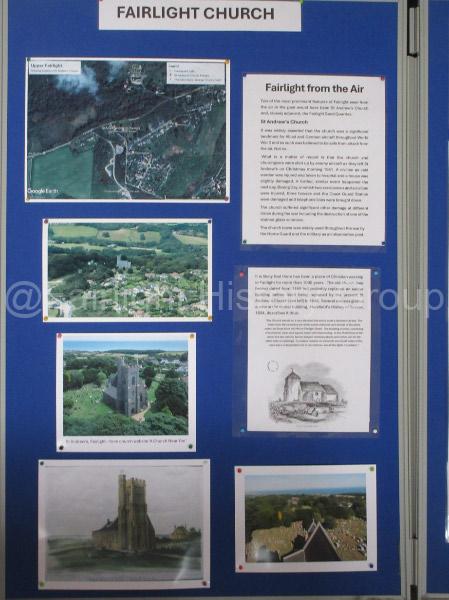
(Looking at a aerial photo of Fairlight Church and the quarry) In this piece that’s what we called the factory, with all sorts of machinery in it. It certainly wasn’t opened at the outbreak of the war; it must have been developed while I was working at Westfield and that would have been from 1941-2. There was always someone in there quarrying the sand –  supplying I should think for building but when the war broke out, they could no longer get sand from France and Belgium for glass making so whoever it was fell upon what they were doing in the quarry close to the church with the sand and they decided it was good enough as I understand what they told me when I was working there. The sand was good enough for glass making although it did have too many little specks of iron but anyway, they did the factory; there wasn’t enough sand close to the church so they opened up the one by Warren Cottage and they quarried that bit; took all the overburden off and quarried that bit and excavated it, put it into trucks, then pulled it along next to Warren Cottage and they had endless cable; and then this cable on a 2 foot railway. One could move the trucks that went up the 26 acre field and fairly opposite to the farm they built up a bank the trucks went up; then they built a crusher sort of by the old sand quarry and the wagons were tipped up and it went down through the crusher to be washed and classified; and the machinery in the factory – we had a big pump for sucking the water out of the sand before they put it on a conveyer to be piled up ready to go onto lorries to go to Ore Station. There were three or four five ton lorries; all sorts of electricity motors for compressed air and vacuumed to suck the air, suck the water out the sand; pneumatic drills for drilling holes to blast down the quarry.

When I left the garage at Westfield, I worked there in the fitter’s shop maintaining the three lorries and helping lubricate and maintain the machinery. There was also next door to the fitter’s shop an electrician who used to deal with the electricity for the buildings and everything and rewind some of the smaller electric motors by the name of Frank Pettitt, and he lived in Hollington.

 I was working there from 1942 to 1945 until I was called up. Because I was working there and because I was keen on the army cadets so they didn’t call me in to be a Home Guard but I used to do shifts of fire waters at the factory in case of fire bombs coming down, with another member of the staff; and in 1944 I was on duty with a member of staff when the first doodlebug come over. We heard the noise and we dashed outside to see what was happening and that was it. Had no idea what it was and at the time it was just something making a bloody lot of noise and the flames out the back. It was just something up in the air that made all this noise. You know I told you about the hump where the skips were tipped up into the crusher, during the day if the doodlebugs would come over, the people who would be on top tipping the trucks had to get off that lump a bit bloody quick as they were afraid they were going to be hit! And the farm cottages – well we lived in the one nearest the farm buildings; well one night one of the doodlebugs hit the cliff and blew my bedroom windows in cos they faced out to sea. There was a Messerschmitt or a Fokker Wolf came over and had a little go at the end room of the Coastguard Station which was the Watch Room – fired a few bullets. The Church was an Observation Post for the army. They were just soldiers about – they were in the bungalow next to what is now the (Church Café) Coastguard Café. The café then was just a little shop with a few lunches but after the war it was developed a bit by the two old ladies (MS -Harman) – they lived on the corner of Hill Road and what was then the Coastguard Lane. They used to sell tobacco and sweets – their granddaughter or niece – Nancy – she sort of took it over into the place that is now the Coastguard Café and made a little shop of it then it grew into doing a few lunches. Nancy – she employed a Polish refugee as a chef and in 1950 the Station Officer at the Coastguard Station said to me (cos I’d just got married in 1953 – I got married the Saturday before the Coronation and lived in St.Leonard’s for ten months, still being a member of the cliff rescue team) in 1954 you’re going to have a job getting here as a rescuer. Number 3 cottage he said will be empty before too long so if you want to take some training to be a Watch Keeper, that cottage is yours. So we moved in in April 1954; they were doing a few lunches then, Nancy was, so she asked me if my wife would like to go up and do a bit of waitressing which she enjoyed. That had to finish when we adopted two kids. I got married from Church Farm Cottages in 1953 when I was 26, got married, went to St.Leonard’s for ten months then into the Coastguards Cottages.

You know Warren Cottage and the field that goes down towards the cliff edge – it’s a sort of a wide field and the butts – they used to be fired towards the bank at the Coastguard Station – that was before the war by the Territorials. I can remember the four big iron things that went up and down for the targets – there used to be little places for people to lay from there up towards the cliff edge up to about 600 yards. When the war broke out they used it as a training area – Canadians especially as far as I can remember because Bob Shearer that would be Alan’s next oldest brother, and I, would go down there after they had been and pick up bandoliers of 300 ammunition; ringless cartridges where 303 British with a flange on the end but the American’s 303s got a ring for extracting the cartridge when the bullet had been fired. That narrow field that was used for training purposes because they thought it was dangerous firing towards the Coastguard Station so they did away with the butts there and they built a big bank just this side of Lover’s Seat to fire at so any stray bullets got over to sea.