Fairlight History Group
5th Annual General Meeting held, Wednesday 21st February 2024 at 2.30pm at Fairlight Village Hall
Present: The retiring committee:
Haydon Luke – Chairman,
Paul Draper – Secretary,
Pauline Collins – Treasurer,
Julie Marshall – Membership Secretary,
Karen Draper, Liz Green and Debbie Jones.
(Liz and Debbie were unable to be present)
Plus 32 other members.
Welcome:- Haydon acted as Chairman and welcomed all to the meeting.
Apologies for absence:- Paul announced apologies for absence on behalf of Liz Green, Debbie Jones, Mick Jones, Peter Firmin, Anne Scott, Pam Chisnell, Carol Ardley, Helen Smith and Annette Humphries, etc
Approval of Minutes of 4th AGM. Draft Minutes were available for inspection at the meeting. Haydon asked if the meeting approved the Minutes. The Minutes were approved.
Chairman’s report:- Haydon presented the Chairman’s report:
Welcome to the 5th FHG AGM. I am delighted that the 2023 year for our group, unlike some previous years, was a ‘normal’ year with no national pandemic to navigate.
I want to begin my review of our 2023 activities with two heartfelt sets of thanks:
First to the committee: Paul, Karen, Pauline, Julie, Liz and Debbie who have worked so hard throughout the year not only in committee meetings but constantly in the background doing lots of mundane but important jobs ensuring that our meetings and events ran smoothly. Formally, the committee met monthly to manage the year and prepare for the future.
Secondly, thanks to you, the members, who have continued to attend meetings, support our activities and share your interest in and enthusiasm for, all aspects of local history. The FHG is only as strong as you enable us to be.
The new year’s programme is now out and we hope we have devised a programme of talks and events for the year which you will find interesting, rewarding and satisfying. The list has been circulated to you all and is on the website. We are always open to suggestions for future talks, visits or activities. If there is something you’d be keen for us to see, do or have a talk on, please tell us what you would like.
Concerning our website, particular thanks are due to Karen and to Bill O’Reilly for overseeing this first-class resource. The number of hits it receives is steadily increasing and we continue to respond to all queries received via the website. Remember the address – https://www.fairlighthistory.co.uk/ . We want to keep adding to it with more pictures, stories, reminiscences etc. If you have any contributions you would like to put on the site, please contact Karen.
Additionally, Paul and I continue to research all aspects of Fairlight with new material emerging all the time. And of course, we are very willing to offer help and guidance to any other members who would like to undertake local research.
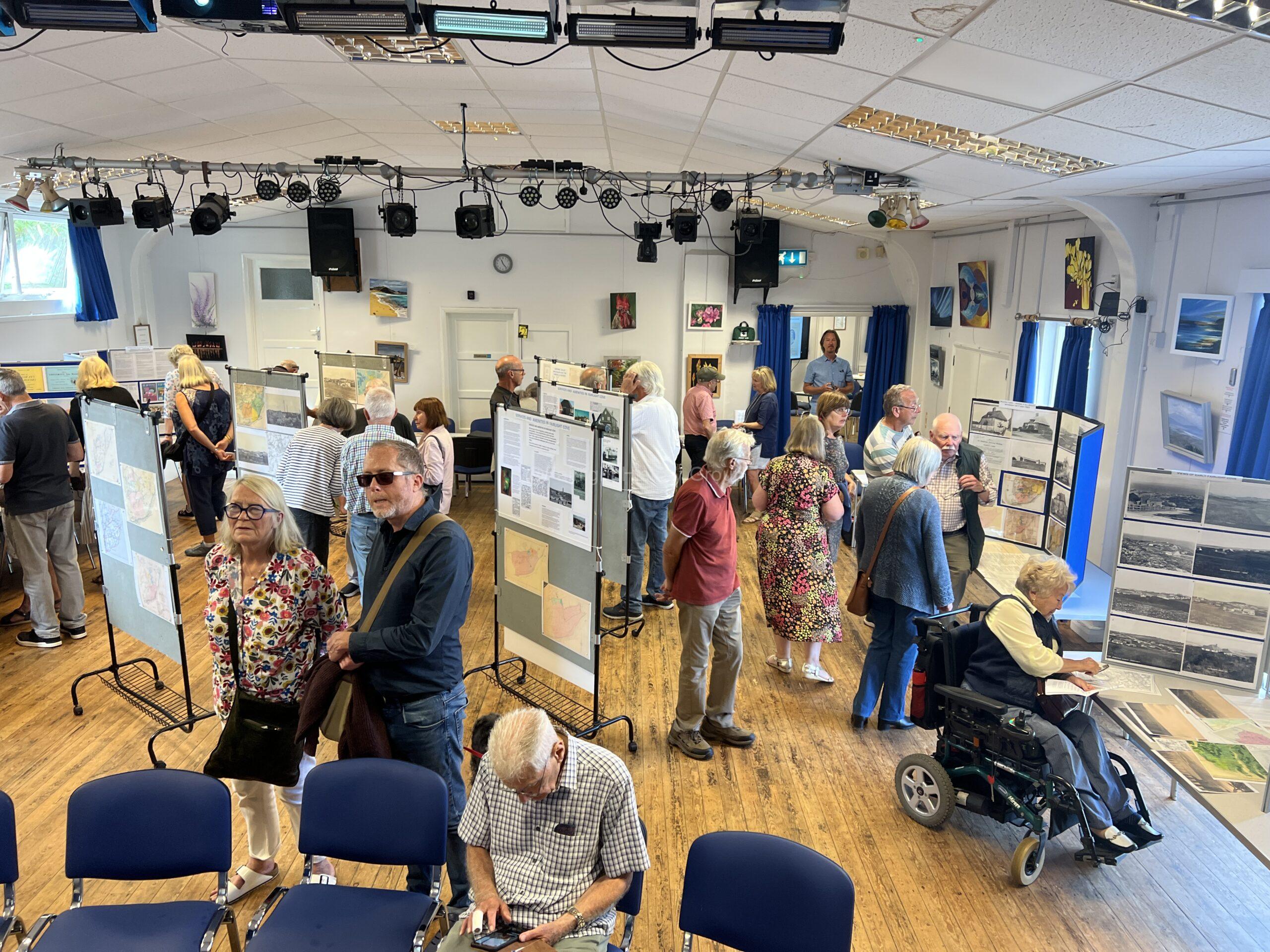
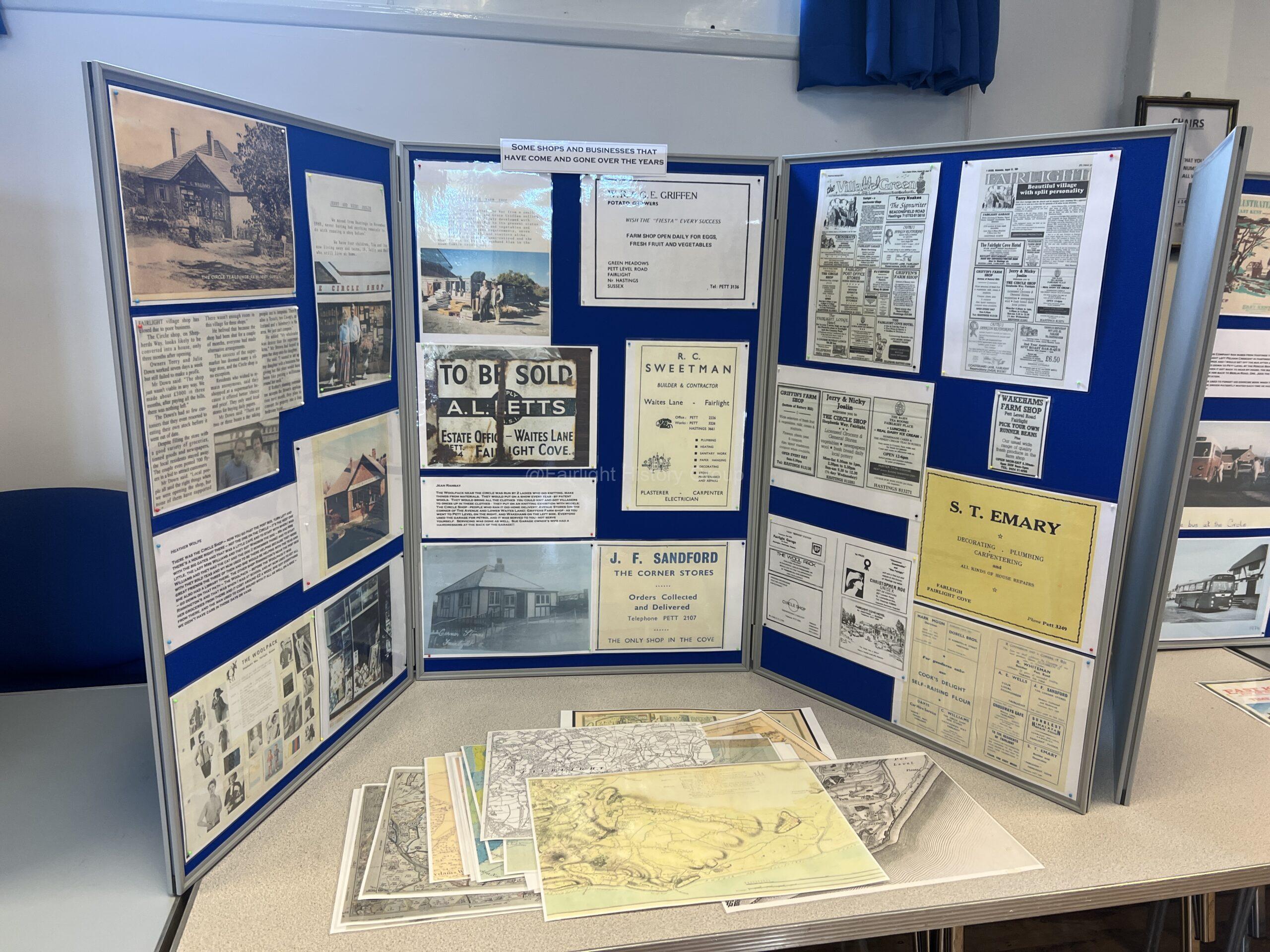
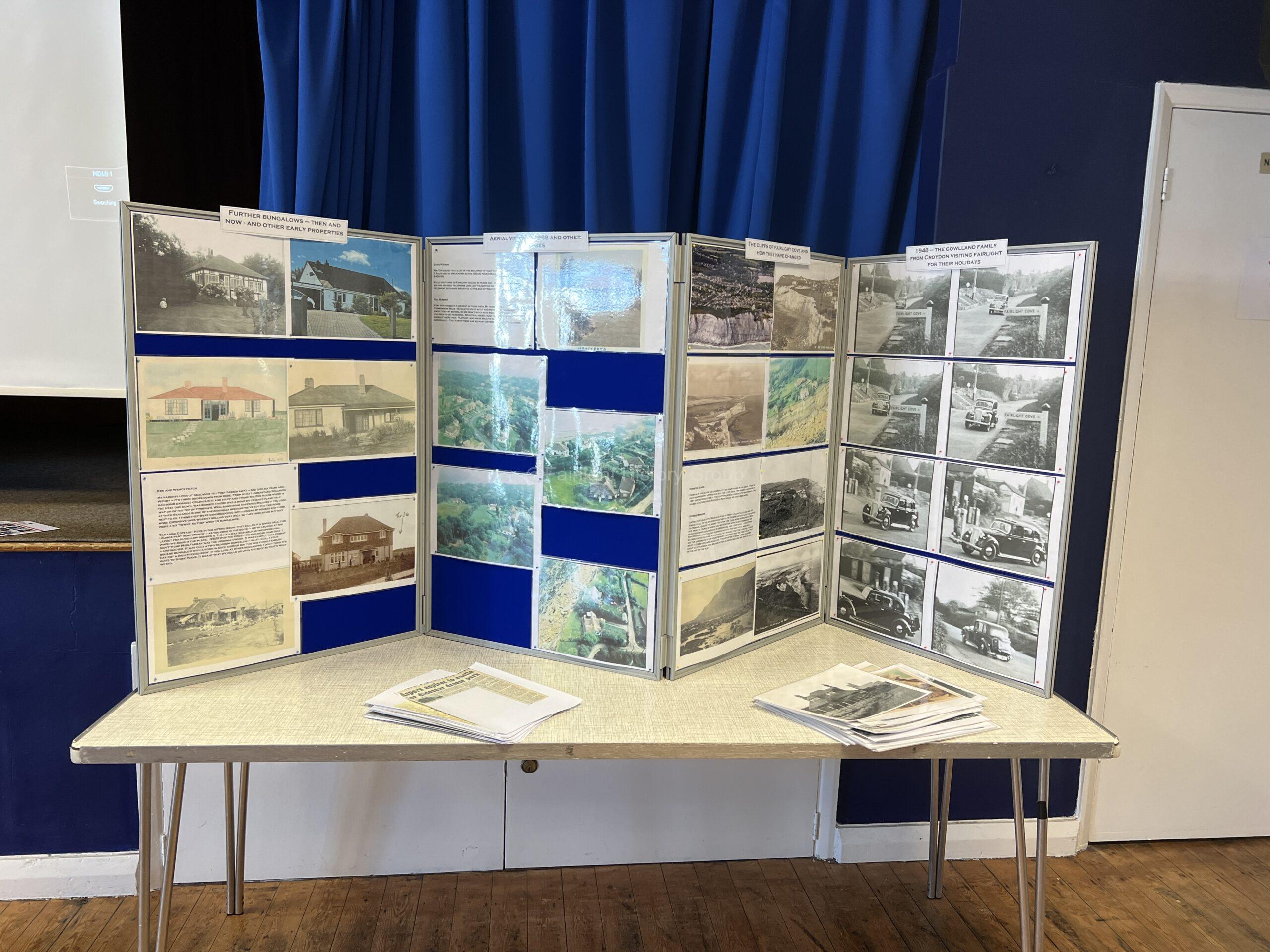
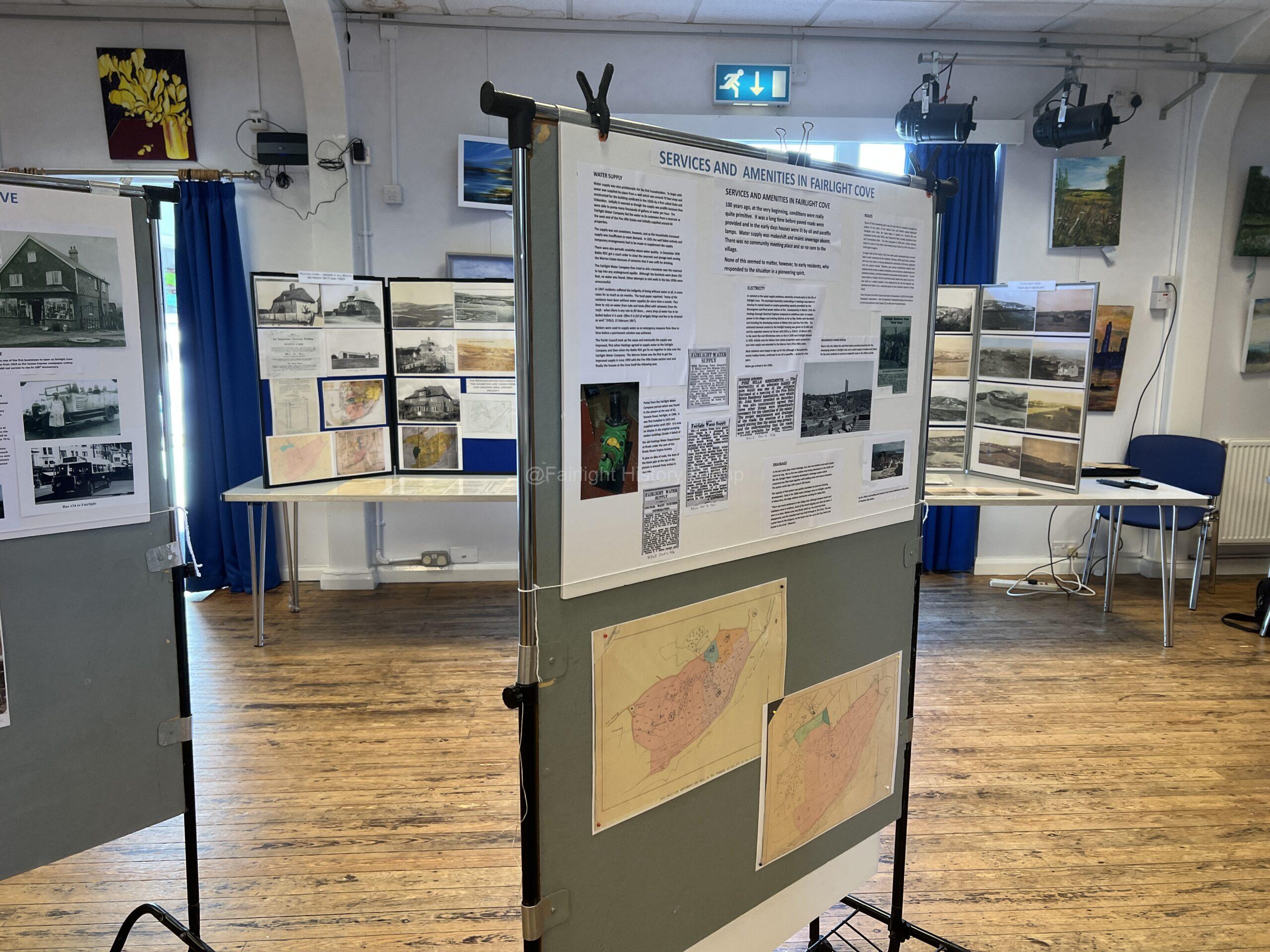
Looking back at 2023 I hope you will agree that we had an interesting and varied programme which included a mixture of talks by our own members and by visiting speakers in addition to special events like the visit to the Winchelsea Methodist Chapel. We also mounted an extensive August exhibition celebrating 100 years of Fairlight Cove in a joint venture with the FRA. We all felt the exhibition was a great success and will be staging another one in October, again jointly with the FRA. Sadly, the planned visit to the Dymchurch Martello Tower had to be cancelled at a late stage owing to the death of the chief organiser for the Friends of Martello 24. The group has now re-organised and the rescheduled visit is in our programme for this summer. The December event – Ancestral Gifts and Curiosities – at which members showed and talked about items in their possession was particularly interesting. The variety of objects, some very eclectic, was quite remarkable. The relaxed atmosphere made a lovely prelude to Christmas. We are thinking that it should probably become an annual event.
One of the aims in wanting to set up a local history group was to respond to the knowledge that bits of the past are slipping away from us and we need to make a determined effort to catch onto those before they are gone forever. We were thinking not only of family memories, personally remembered accounts of things from the past, but also tangible remains – photos, letters, deeds, scrapbooks, farm papers – all sorts of ephemera which provide so much detail about the past.
The determination to do something about memories and reminiscences led us to set up our oral history project and we are grateful to the Parish Council which for the last 2 years has supported this aspiration with a special grant. As most of you will be aware we have been able to make really excellent progress with that project. Karen, Paul, Liz and Debbie conducted a further series of interviews and were able to edit Volume 2 just in time for the Village Hall Christmas Fair. This second edition of ‘Memories of Fairlight, Pett and the Local Area by the People who lived here’ is, once again, a fascinating anthology of Fairlight and the local area, as remembered by the women and men who lived it. Once again it has proved popular and sold well, but if you do not have your copy yet there are still a few copies available.
Encouraged by the continuing positive reception of the project we intend to keep going and once again, we will have a new selection of topics. Anyone who would like to join the team will be most welcome. Please let us know of your interest. Training will be given.
Last year I said that we also have ambitions to publish some booklets covering particular local history topics such as a history of St Andrew’s Church, the wartime years including RAF Fairlight, the Lucas-Shadwell family, Fairlight Place and an account of the development of Fairlight Cove itself. Although we have made a substantial start the pressure of time meant that this project has slipped a bit but be assured that the publications will come.
Your committee is also keen to continue to work with other local groups with an interest in exploring and/or preserving local history, for example the Hastings Area Archaeological Research Group (HAARG) and the Archive and Resource Centre (ARC). The latter is now firmly established in a well-equipped room at the Pett Methodist Chapel and is busy getting on with the business of cataloguing and safely keeping hold of those other irreplaceable bits of the past – all those photos, letters, deeds, maps, scrapbooks, farm papers etc, – and making them accessible to anyone interested. It has its own website which you can see at https://www.thearc.uk/
We are also proud that the FHG has had a hand in helping create a bit of history. I refer to the village map which for years has been sited in a glass case at the entrance to the village on Waites Lane. Last year it became clear that it needed replacing and updating and the Parish Council decided to initiate and fund that process. Julie volunteered to design and paint the new map with some input from Paul helping with the necessary updates and corrections. Julie has produced a wonderful new map and this was installed in a splendid new case, and with a hidden time capsule it was duly unveiled on the 24th January in front of a small crowd including the local press. So the FHG doesn’t just record local history, it makes it as well!
We are pleased to be celebrating our 5th anniversary. For the FHG and the future our continuing aspiration is that we will meet the needs and interests you have expressed in our local history here in Fairlight and the surrounding area and that you will be minded to renew your membership. It is a bargain at £10 p.a. As I said earlier, If you have ideas or suggestions for future talks or sessions, please let us know. The FHG will strive to fulfil your expectations.
And now it is time to move on through the agenda and so we proceed to the Treasurer’s report.
Treasurer’s report :- Pauline presented the report.
We started the year with £1,788.17. Income was generated by £825.00 memberships, £129.00 temporary memberships, £625.00 booklet sales, £200.00 Parish Council grant and other miscellaneous including £15.00 for our final mug sales. Expenses included £210.64 on speakers and training, £203.00 Village Hall hire, £481.23 equipment and booklet printing, £49.00 website fees and £50.00 donations. As a result, we finished 2023 with £2,613.30 net, but this still includes the £200.00 Parish Council grant, as yet unutilised. The accounts have been audited as at the end of 2023 by Diana Hill who has signed them off as a correct and accurate record. The accounts remain available to be reviewed. Diana was thanked.
Haydon asked the members if they agreed to accept the accounts as presented. Proposed Mary Stewart and seconded Jenny Turner.
Election of Committee members:- Haydon advised the members present that, in accordance with the FHG Constitution, all Committee members must resign and offer themselves for re-election, if they wish to continue. All seven offered themselves for re-election. Haydon then asked if any other member present wished to stand for any position on the Committee, but no more hands were raised. The members were asked to vote for or against the seven names to form the committee for the next twelve months. Proposed Shirley Gilbert and seconded Cas Barlow. The voting was unanimously in favour of all candidates, so Haydon declared the new Committee as duly elected.
Nomination of Auditor:- Diana Hill has agreed to act again as our Auditor. This was agreed by the members.
Any Other Business:- Members were asked for questions under Any Other Business.
No questions were raised.
Close of meeting:- There being no further business, Haydon declared the formalities of the 5th AGM closed at 2.50pm.
Following the formalities, Paul and Karen put on a PowerPoint presentation showing all the talks, outings, exhibitions, displays and other events that FHG has put on over the last five years. In summary Paul stated that since FHG’s formation at the beginning of 2019, we have held 40 talks in the Village Hall, 2 in Pett Village Hall, 5 Zoom meetings, 3 exhibitions, 7 displays and quizzes at Village hall Fairs and 4 outings. Paul encouraged questions and received many useful comments and suggestions about potential events and some repeat presentations for the future. Additionally, during the talk, Haydon and Karen expanded and updated us on some specific talks and other subjects. The presentation concluded and the overall meeting was closed at 3.35pm.
There then followed extended conversations with all our members present, over tea and biscuits.
Prepared by Paul Draper, Secretary
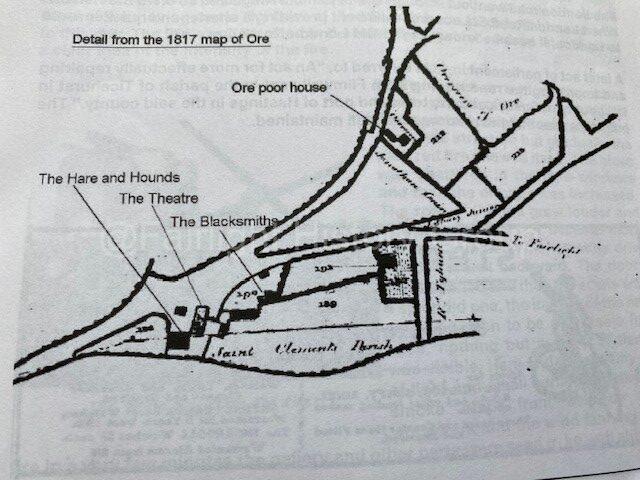
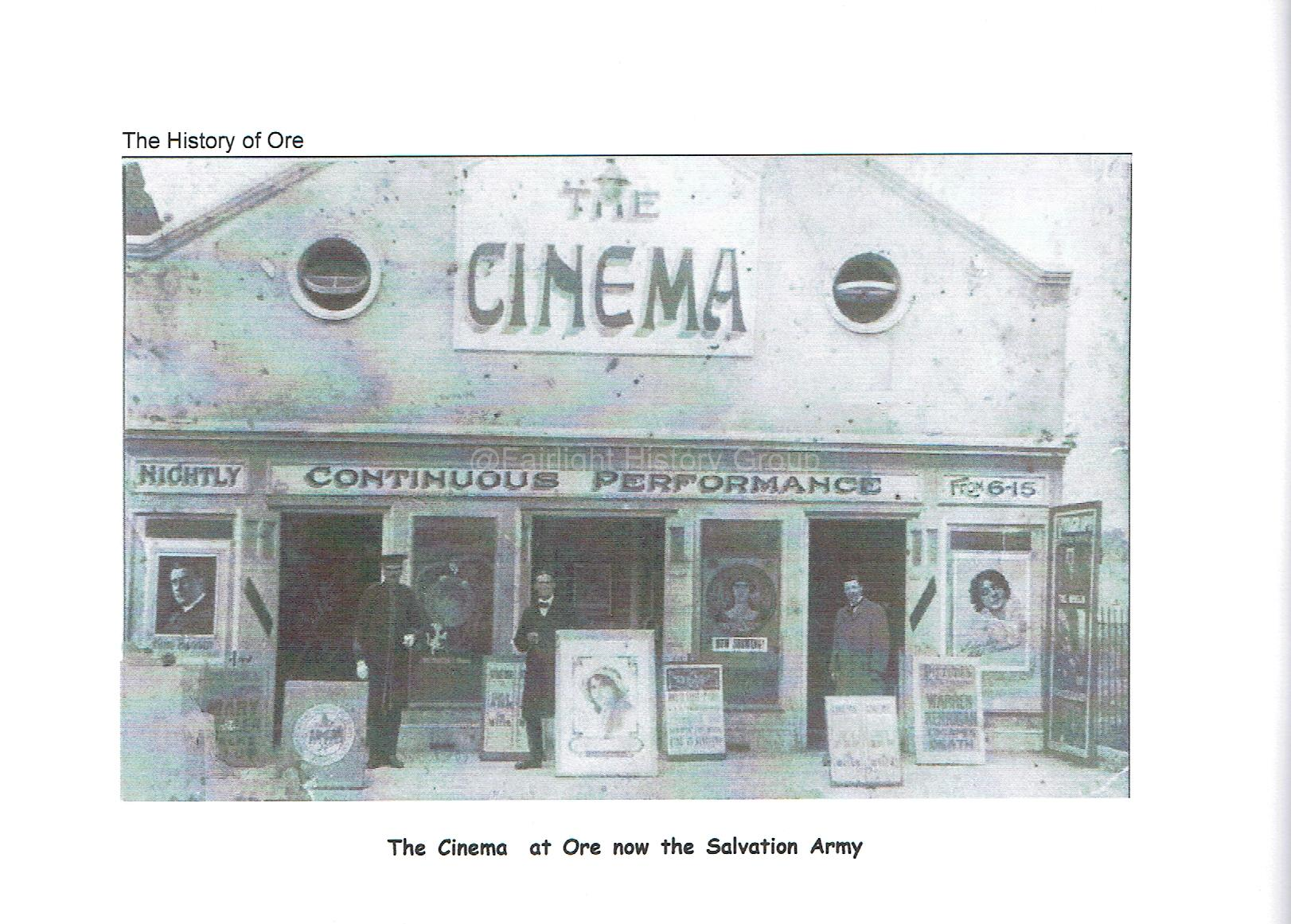 For a brief time in the early 20th century Ore Village even had its own Cinema – originally called The Princess then became The